Worn Or Failed White Coating
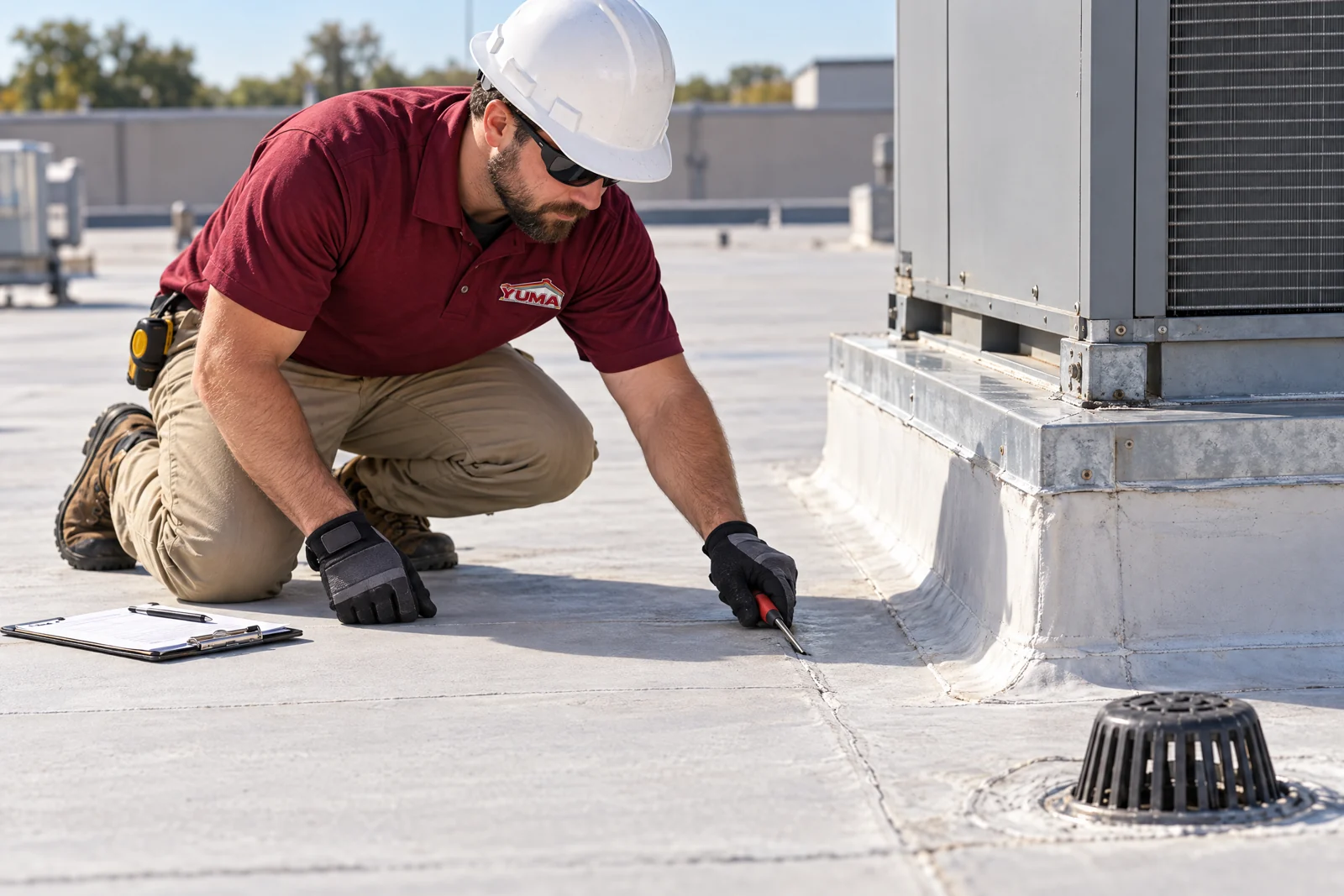
A white roof is not automatically coating-ready. We look for worn, loose, thin, or failed protection and separate repairable areas from surfaces that cannot provide a sound base.
Commercial Roof Coating
Does The Existing White Surface Need Renewal?
Wellton roof coating for commercial roofs in Wellton, AZ starts with worn protection, seams, equipment access, drainage, and the building schedule.
Coating a commercial roof requires a sequence that respects tenants, deliveries, rooftop equipment, and building use.
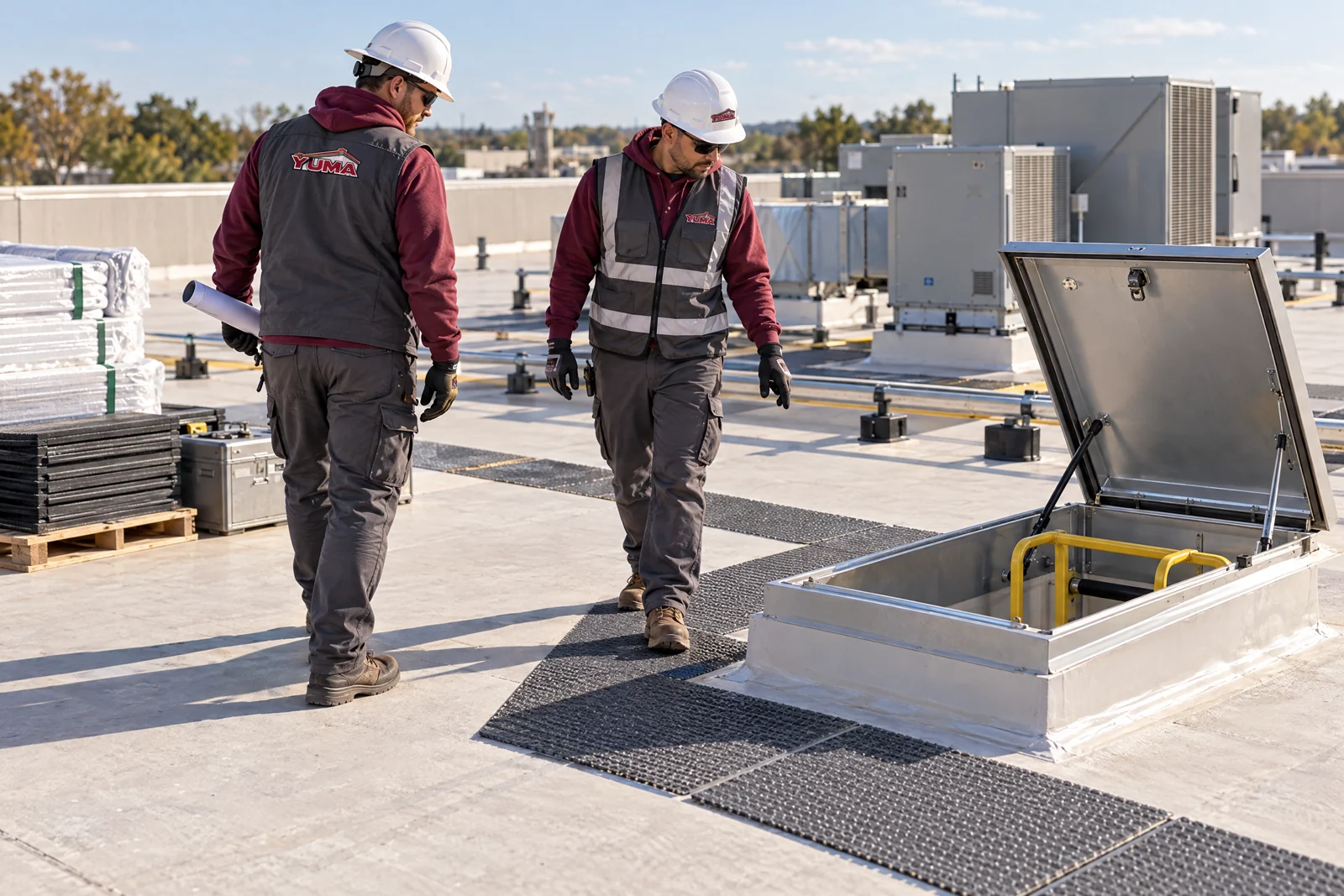
We map roof access before work so property staff know which routes, loading areas, and parking spaces may change during each work window. The sequence should fit the building instead of treating an occupied property like an empty job site.
Tell us about tenant notices, delivery times, rooftop equipment, HVAC intakes, and restricted areas. Clean staging keeps materials, tools, and foot traffic organized while the roof is prepared and coated.
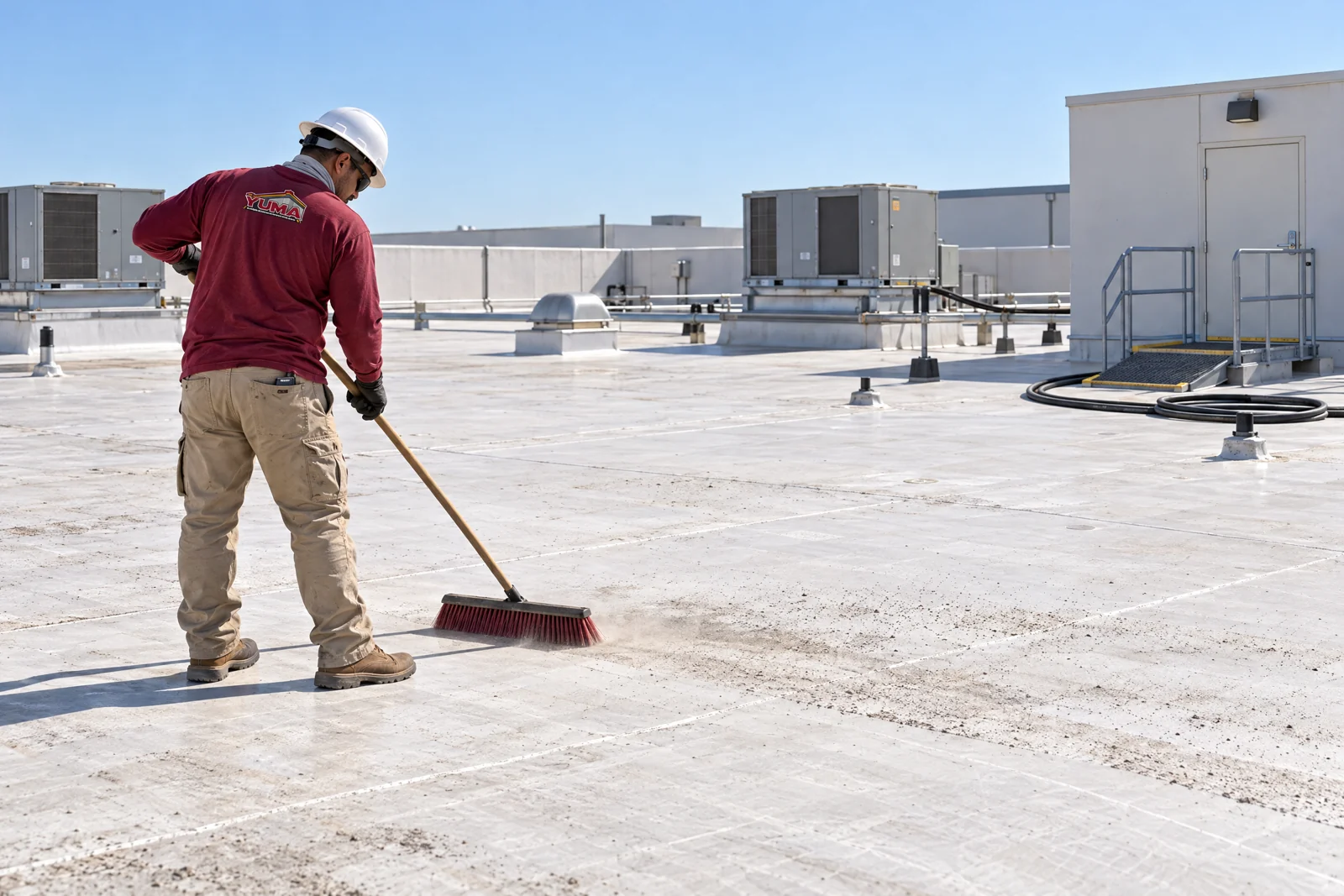
An already-white roof can still need restoration, cleaning, repairs, or a different recommendation. We check the condition beneath the appearance before choosing a recoat.
A white roof is not automatically coating-ready. We look for worn, loose, thin, or failed protection and separate repairable areas from surfaces that cannot provide a sound base.
Dust and chalking can make a roof look gray or older than it is. Cleaning may be the right first step, while actual wear, adhesion, and exposed material require closer attention.
Open seams, loose fasteners, and panel movement can let water reach vulnerable areas. Those details need repair before coating so a new layer does not hide a loose connection.
Damaged flashing, pipe connections, drains, and equipment bases often need detail work. Sealant, reinforcement, or separate preparation may be required before the open roof is coated.
A coating is not a roof-leveling material. Low areas and ponding need drainage work or another roof decision first; adding material alone will not move water off the roof.
When the existing assembly is suitable, coating can restore protection while keeping the roof decision tied to condition rather than appearance alone.
When the existing assembly is sound enough, coating can keep usable roofing in place instead of paying to remove and rebuild it. We first separate serviceable areas from wet, loose, or damaged layers.
Keeping suitable roof layers can reduce demolition, debris handling, and the work associated with a full tear-off. That may make staging around tenants, deliveries, and equipment more manageable, but repairs and cure time remain part of the job.
A suitable coating project can leave sound roofing on the building rather than sending usable material to disposal. The amount of waste avoided depends on the areas that remain attached, dry, and fit for restoration.
A maintained coating may be renewed later with a compatible product when the roof remains suitable. That future option depends on inspection, preparation, and the condition of the existing system; it is not a promise to avoid replacement.
The existing roof system, condition, drainage, and access determine which commercial roof coating option can be considered.
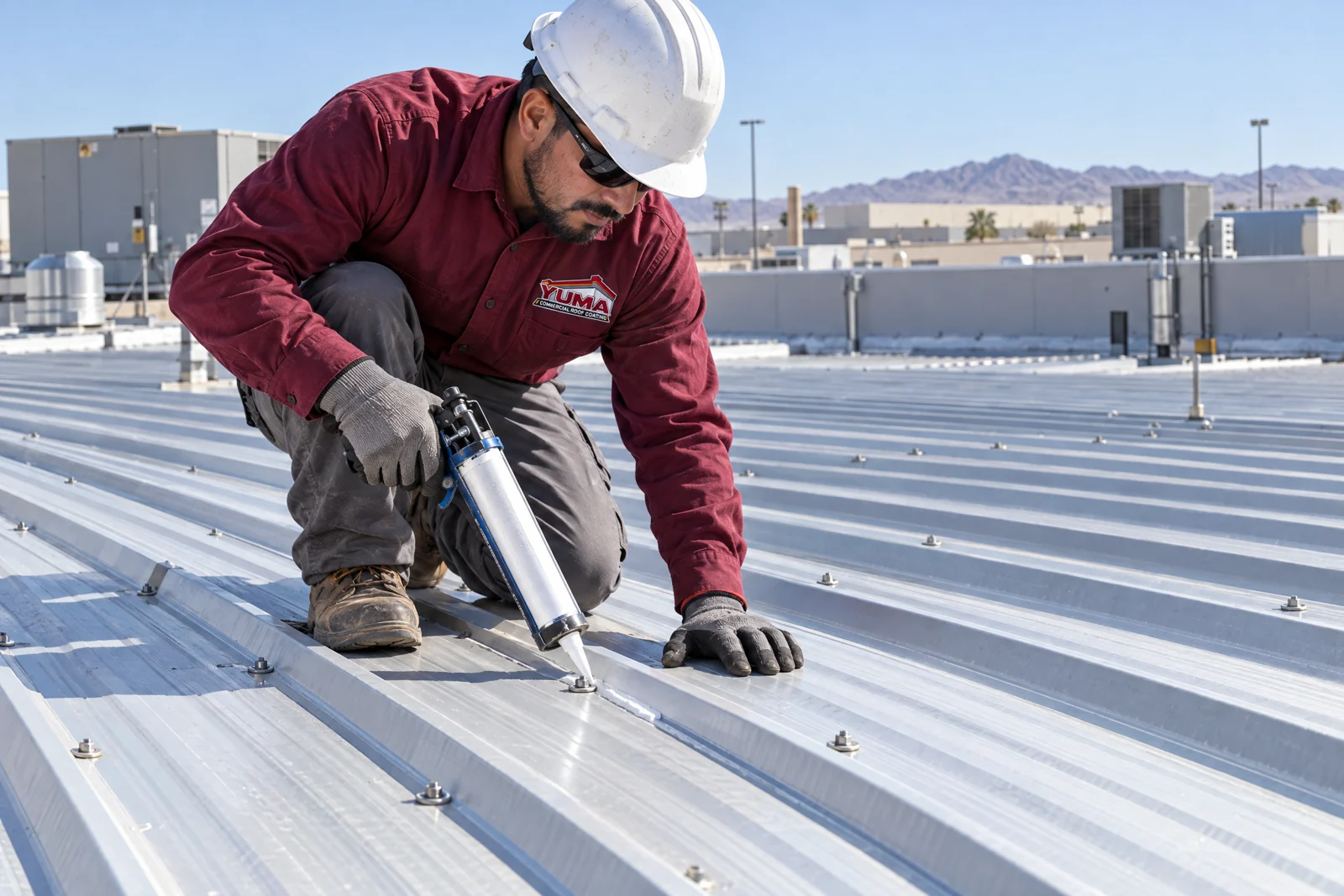
We check rust, seams, fasteners, panel connections, and damaged sheet metal before coating. Metal roof coating follows repair and primer needs.
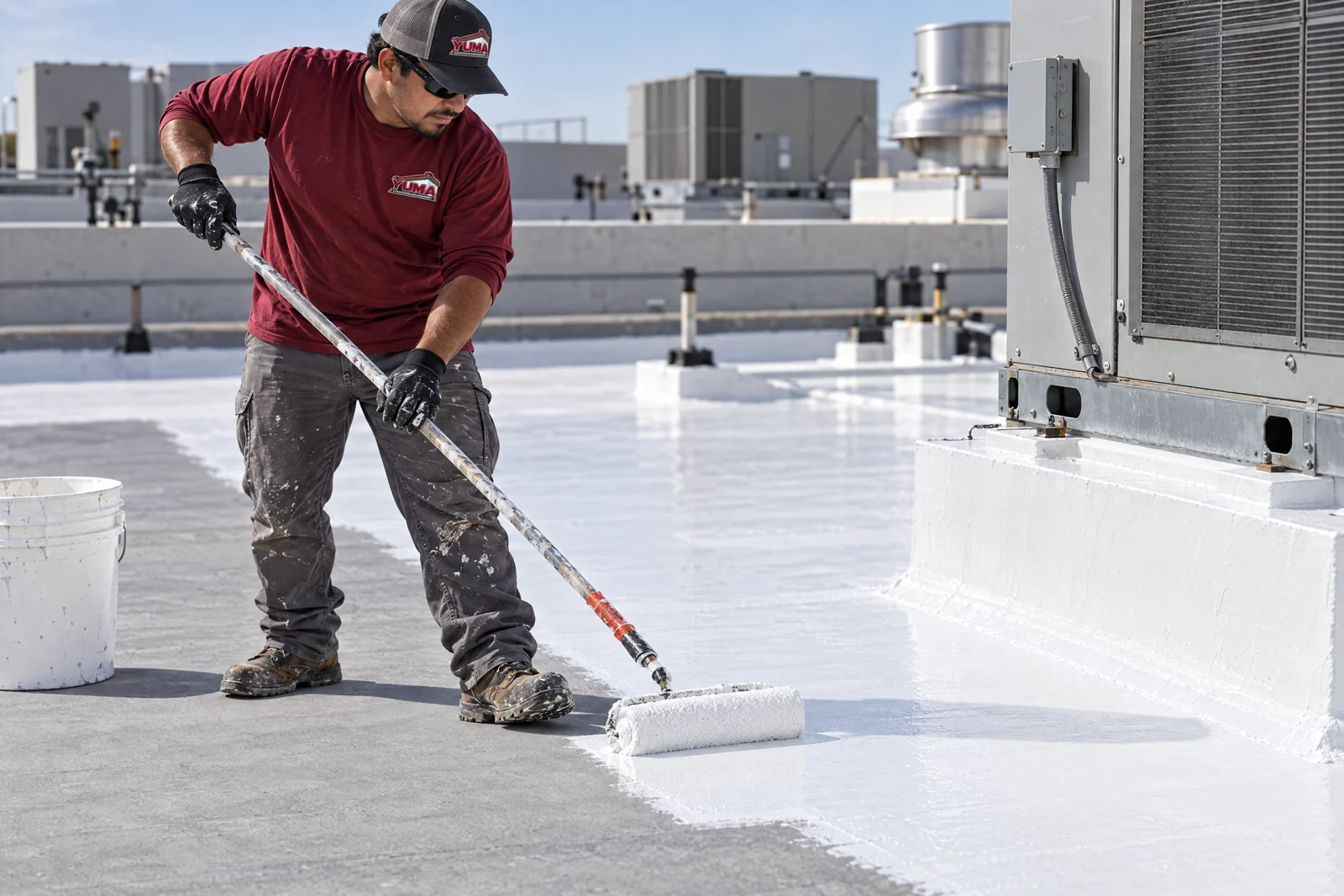
Silicone may suit a compatible low-slope roof where moisture and ponding have been investigated. Silicone roof coating does not repair a damaged assembly.
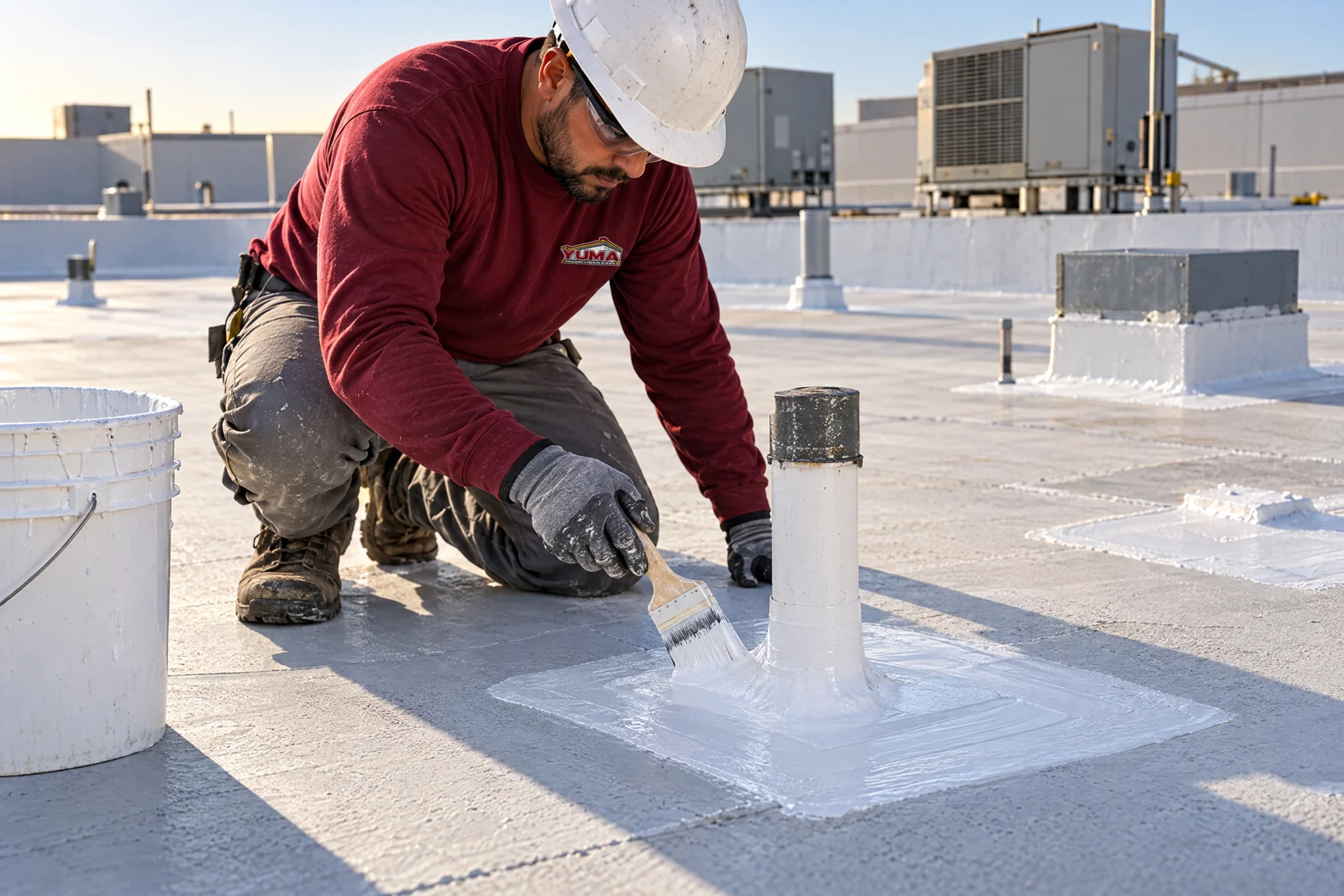
Acrylic requires a compatible surface, good drainage, and application conditions that allow it to dry. We check prior coatings and low areas before selecting it.
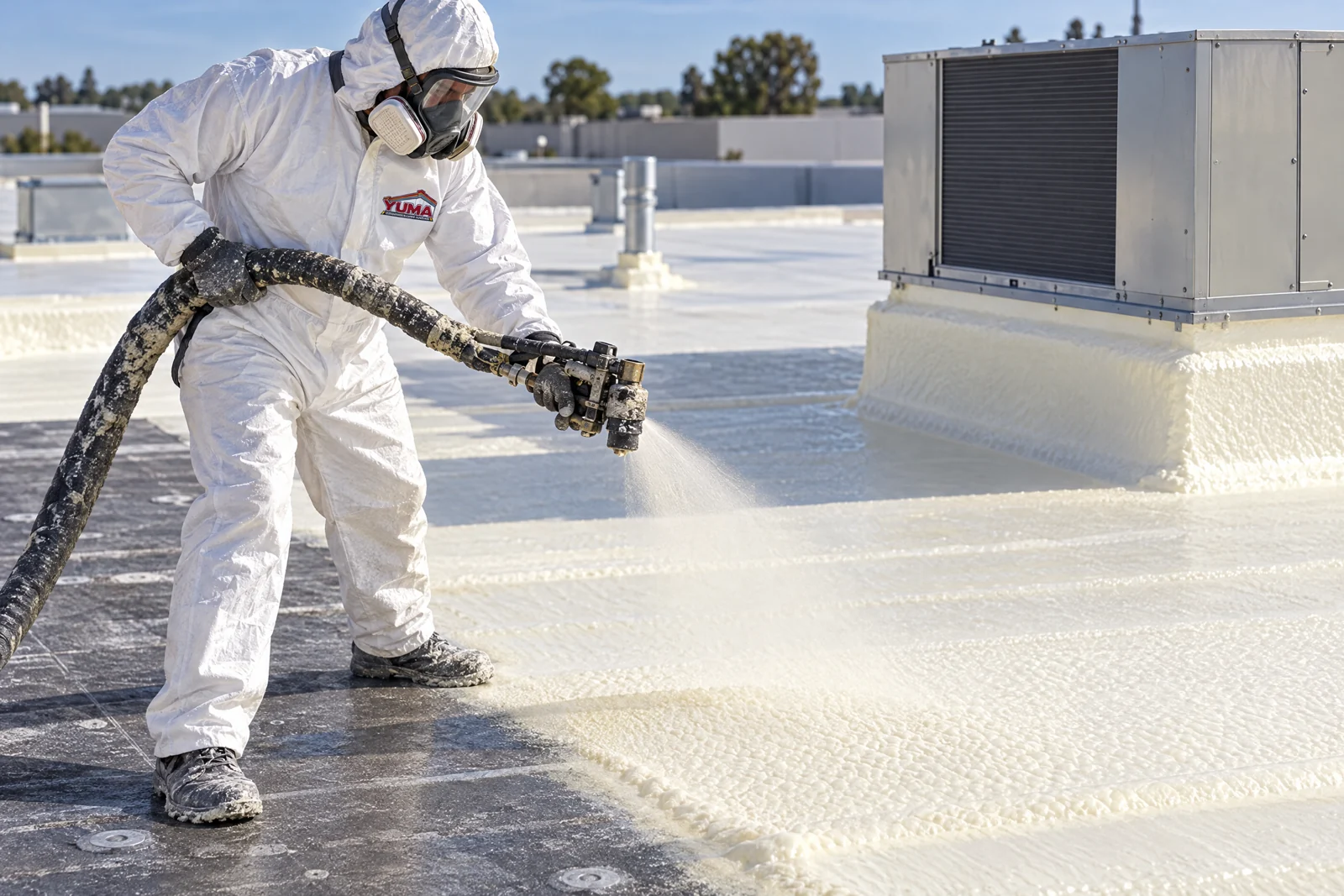
Sound foam may need renewed protective coating, while wet, exposed, or damaged foam needs separate attention. We identify where additional foam is actually needed.
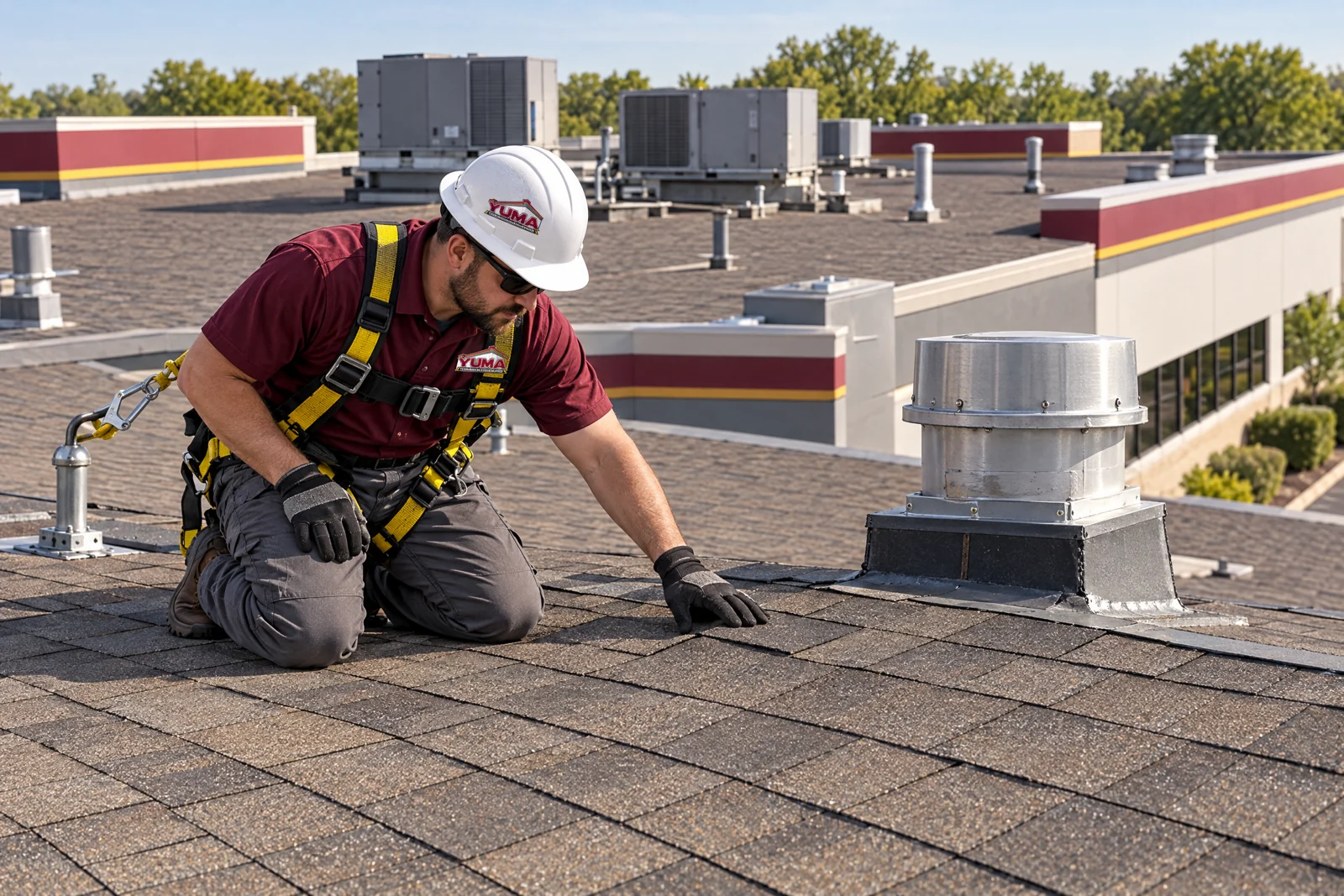
Commercial shingle roofs need a narrow compatibility and condition check. Repair or replacement may be more appropriate than coating the existing shingles.
We inspect the existing roof, repair and prepare suitable areas, coordinate access, then apply and check the selected coating system.
We identify the existing roofing material, worn protection, moisture concerns, seams, fasteners, penetrations, flashing, equipment bases, drains, and low areas. A white appearance does not replace this inspection.
We separate dirt from coating failure, check whether moisture is present below the surface, and trace ponding or low areas. Drainage problems need correction before a coating choice is finalized.
Loose materials, open seams, damaged details, and other repair needs come before the main application. Cleaning and surface preparation must leave a suitable base, with rooftop equipment and intakes protected.
Wellton Building Safety reviews proposed commercial projects. Check the property’s coating or repair review requirements before work. We select a compatible system and coordinate staging with tenants, deliveries, equipment servicing, loading routes, and roof-access restrictions.
The selected system is applied to its coverage and thickness requirements. We check coverage and detail areas, then account for cure time before maintenance staff, equipment service, or other roof traffic returns.
Commercial roof coating is also available in nearby approved service areas across the Yuma region.
Somerton commercial properties can receive condition-led roof coating and preparation.
Somerton Roof CoatingSan Luis building owners can plan coating around roof access and operations.
San Luis Roof CoatingFortuna Foothills properties can review coating suitability before application.
Fortuna Foothills Roof CoatingDowntown Yuma commercial roofs can be staged around occupied building use.
Downtown Yuma Roof CoatingPossibly, but making a white roof look white again is not enough reason by itself. We check whether the existing protection is worn, chalked, loose, or damaged and whether the roof remains a suitable base.
A roof that is already reflective may have less room for cooling improvement than a dark roof. The decision is about restoring worn protection and addressing roof condition, not promising a dramatic cooling change.
When most of the roof stays in place, a suitable coating project may involve less demolition, debris handling, and full tear-off activity than rebuilding the roof. That can make staging around an occupied building more practical.
Cleaning, repairs, access controls, and cure time still require coordination. We need to know tenant activity, deliveries, parking, loading areas, and rooftop equipment before setting the work sequence.
We do not judge the roof by color alone. Dirt can make a sound coating look gray, while chalking, loose areas, exposed substrate, thin coverage, and damaged details can indicate actual wear.
Cleaning may be the right first step when the coating remains attached. If protection has failed or the base is unsound, preparation and repairs must be addressed before another coat.
We start by identifying work hours, tenant notifications, delivery times, loading docks, parking routes, and restricted roof access. Those details help divide the roof into workable areas instead of blocking every building activity at once.
A property contact can coordinate questions while work is underway. Materials and tools also need clean staging, and areas around rooftop equipment or HVAC intakes need protection and clear access.
Tell us where HVAC equipment and air intakes are located before coating is scheduled. The work area may need protection, controlled access, and a sequence that keeps equipment serviceable without blocking an intake.
Any temporary operating change should be coordinated with the facility team and HVAC contractor. Equipment should not be shut down or an intake blocked without an agreed plan.
No, not as a substitute for drainage work. A standard coating is not a roof-leveling material, and adding more coating will not make water leave a low area.
We check where water collects and why it remains there. Drainage corrections or other roofing work may be needed before a coating system can be considered for the surrounding roof.
Tell us about the existing white roof, building operations, equipment access, and areas that need attention.