Commercial Roof Coating · Yuma, AZ+1 (928) 430-5699
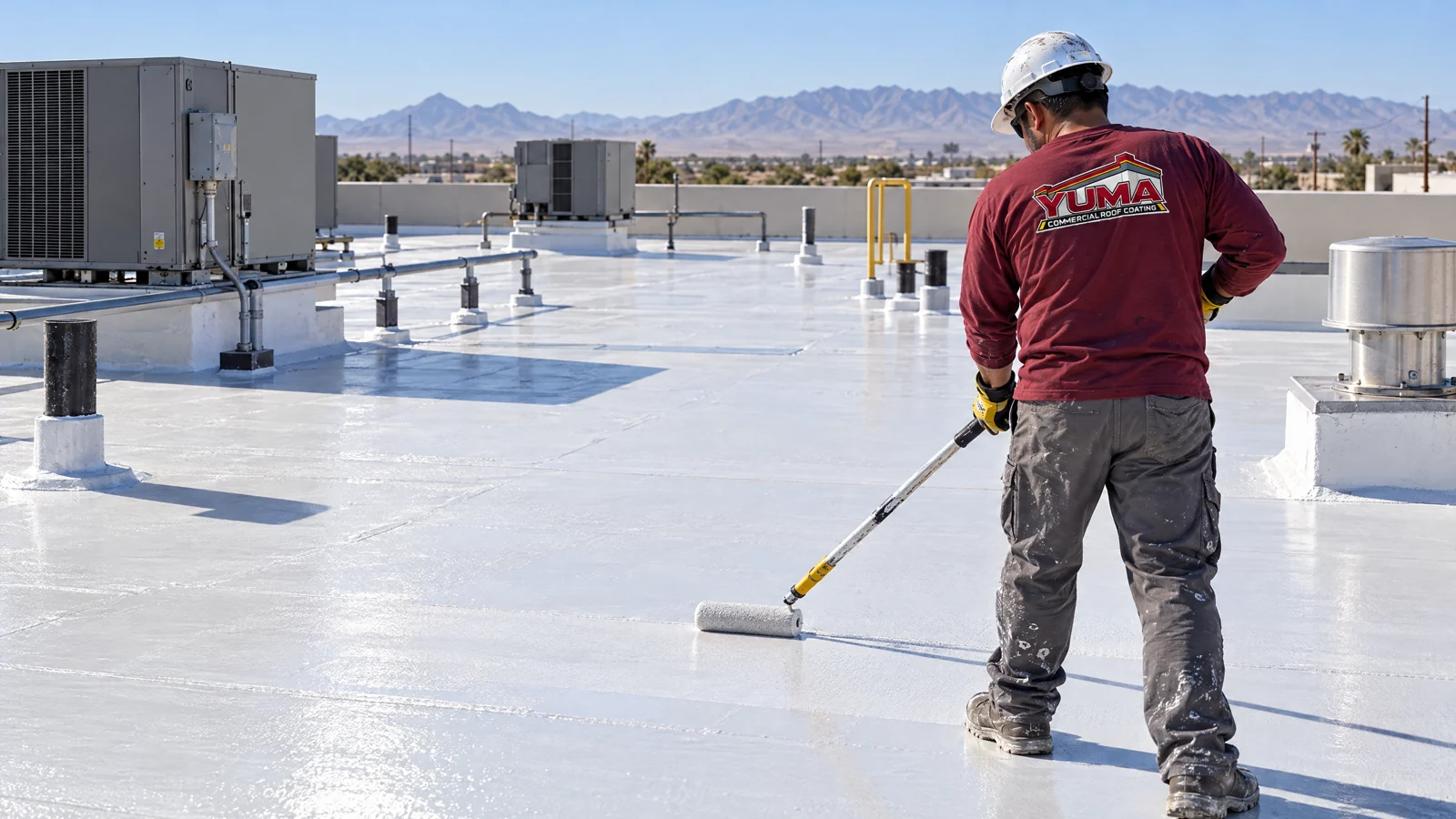
Worker applying a coating across a commercial low-slope roof

Commercial Roof Coating

Fortuna Foothills Roof Coating

Is It Surface Dust Or Damage Underneath?

Fortuna Foothills roof coating in AZ starts with checking commercial roofs for dust, hidden moisture, drainage problems, and repairs before we choose a system.

Dust, Moisture, And Roof Condition

A dusty roof surface and wet insulation are different findings. We check both before cleaning, repairing, or coating a commercial roof.

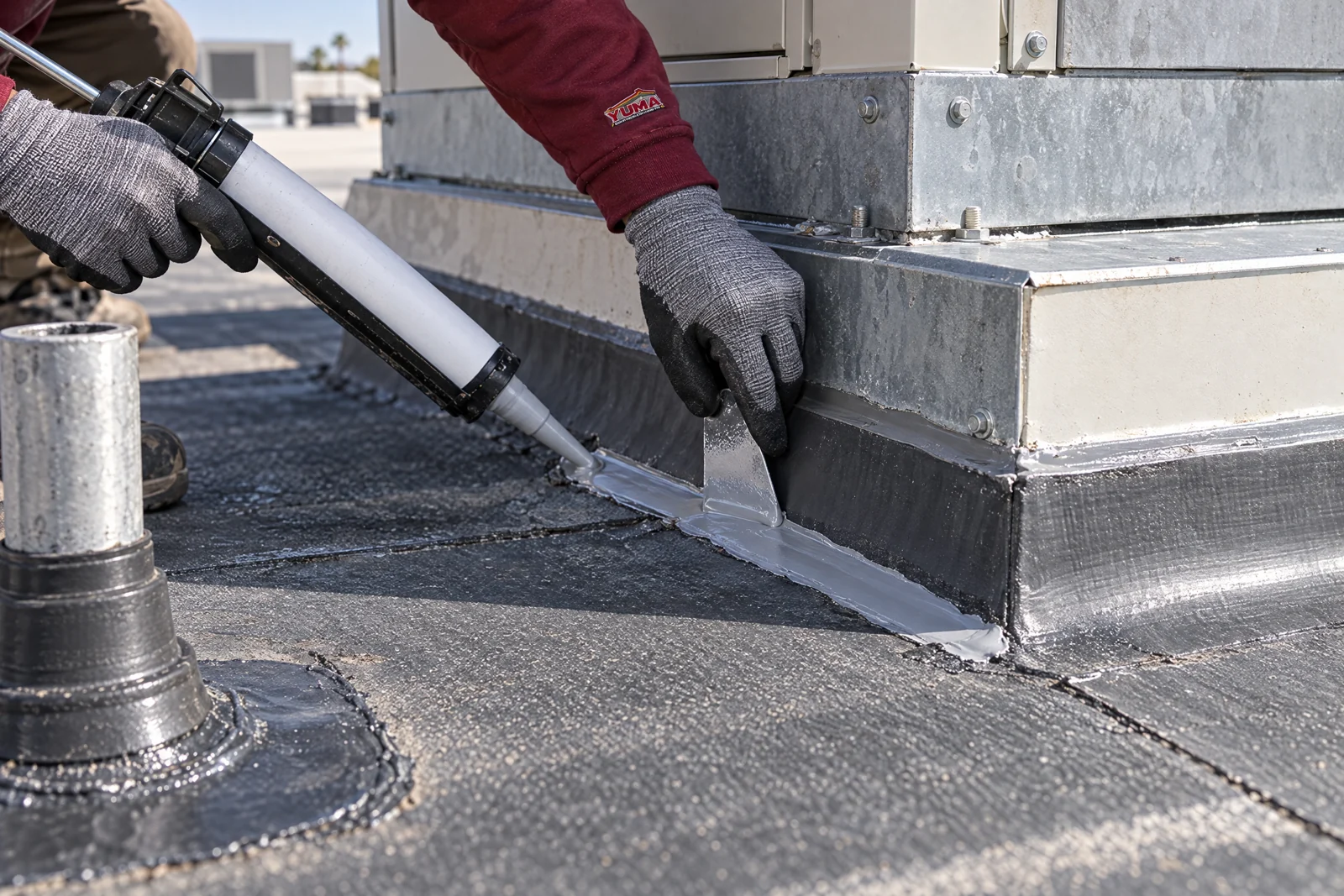
Gloved hands preparing flashing around a commercial roof curb

Dust can make a coating look gray and can contaminate a surface prepared for new material. Cleaning may be needed before wear, loose areas, or damage can be judged. A dry-looking top surface does not prove that layers below are dry; moisture testing may be needed when leaks, stains, soft areas, or roof history point underneath.

We check seams, fasteners, patches, drains, low areas, equipment, and access restrictions. Those findings show whether work starts with cleaning, detail repairs, drainage work, testing, or coating.

  • Clean dust before judging adhesion or coating condition.
  • Test suspected moisture below a dry surface.
  • Treat seams, patches, edges, and penetrations as details.
  • Coordinate access around equipment and occupied areas.
Roof Conditions To Check

Fortuna Foothills roof coating decisions depend on what the existing assembly can support, not on surface color or one leak description.

Dust And Dirty Coating

Dust can make a roof look gray, worn, or uneven without proving that the coating has failed. The surface may need cleaning before wear, loose areas, and damage can be judged accurately.

  • Clean before adhesion decisions.
  • Look for actual wear, not color alone.

Suspected Wet Insulation

Heat does not dry hidden wet insulation simply because the top feels dry. Moisture testing may be needed, and saturated insulation generally needs removal and replacement before coating.

  • Check below the visible surface.
  • Do not coat to conceal wet materials.

Ponding And Low Areas

Water that collects in a low area needs a drainage and roof-condition decision. A standard coating is not a roof-leveling material, and adding thickness does not replace a way to move water off the roof.

  • Trace where water collects.
  • Separate drainage work from coating.

Loose Details And Patches

Loose seams, missing fasteners, damaged sheet metal, and failing patches need attention before the open roof is coated. Old repairs also need compatibility checking rather than a quick cover-up.

  • Repair loose details first.
  • Check old patch materials and primers.

Equipment And Restricted Access

Pipes, equipment bases, drains, edges, air intakes, and restricted roof zones change the work sequence. Detail work, protection, and facility coordination should be addressed before materials are applied.

  • Identify equipment and intakes.
  • Keep agreed access routes clear.

Benefits of Coating Your Roof

Coating may make sense when the existing commercial roof is a suitable base and the needed repairs and preparation are completed first.

Retain Suitable Roofing

When inspection finds the roof suitable, coating can keep usable roofing in place instead of removing and rebuilding it. That may avoid some removal and material costs, but damaged layers still need correction.

Reduce Tear-Off Disruption

A suitable coating project may involve less demolition and debris handling than rebuilding the entire roof. Cleaning, repairs, staging, and access still need planning around deliveries, tenants, and facility operations.

Avoid Unneeded Disposal

Keeping sound roofing in place can reduce the amount of usable material sent through tear-off and disposal. The amount avoided depends on what inspection finds; coating is not a promise of zero waste.

Preserve A Future Recoat Option

A maintained coating may be renewed with a compatible product when its condition allows. Future recoating remains an option to inspect and prepare for, not a promise that replacement will never be needed.

Commercial Roof Coating Options for Fortuna Foothills

The right system depends on the existing roof, moisture findings, drainage, prior coatings, and preparation requirements.

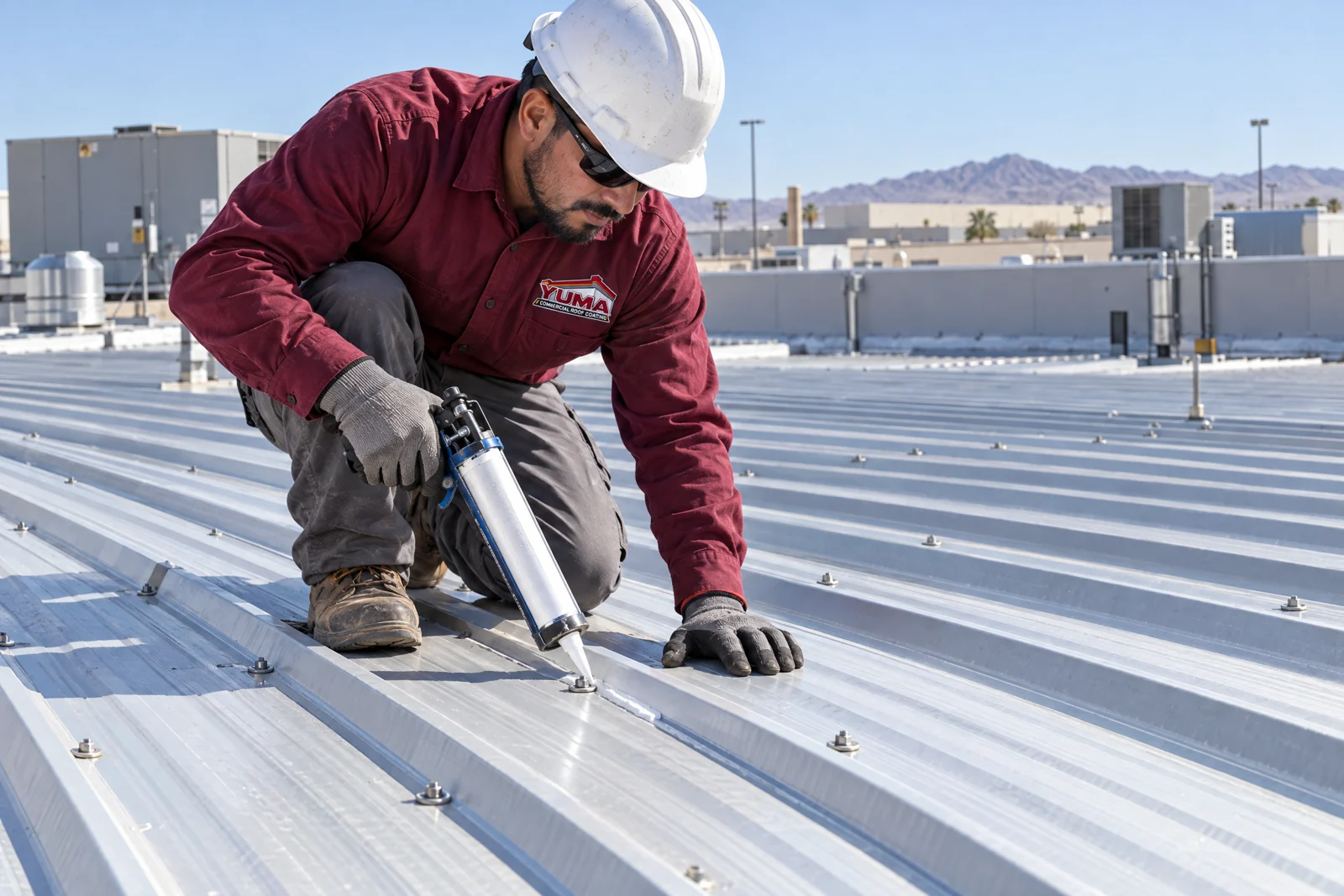
Worker sealing a joint on commercial metal roof panels

Metal Roof Coating

Metal preparation checks fasteners, panel connections, rust, seams, and damaged sheet metal. Coating protects a properly repaired roof; it does not hold loose panels together.

Explore Metal Roof Coating
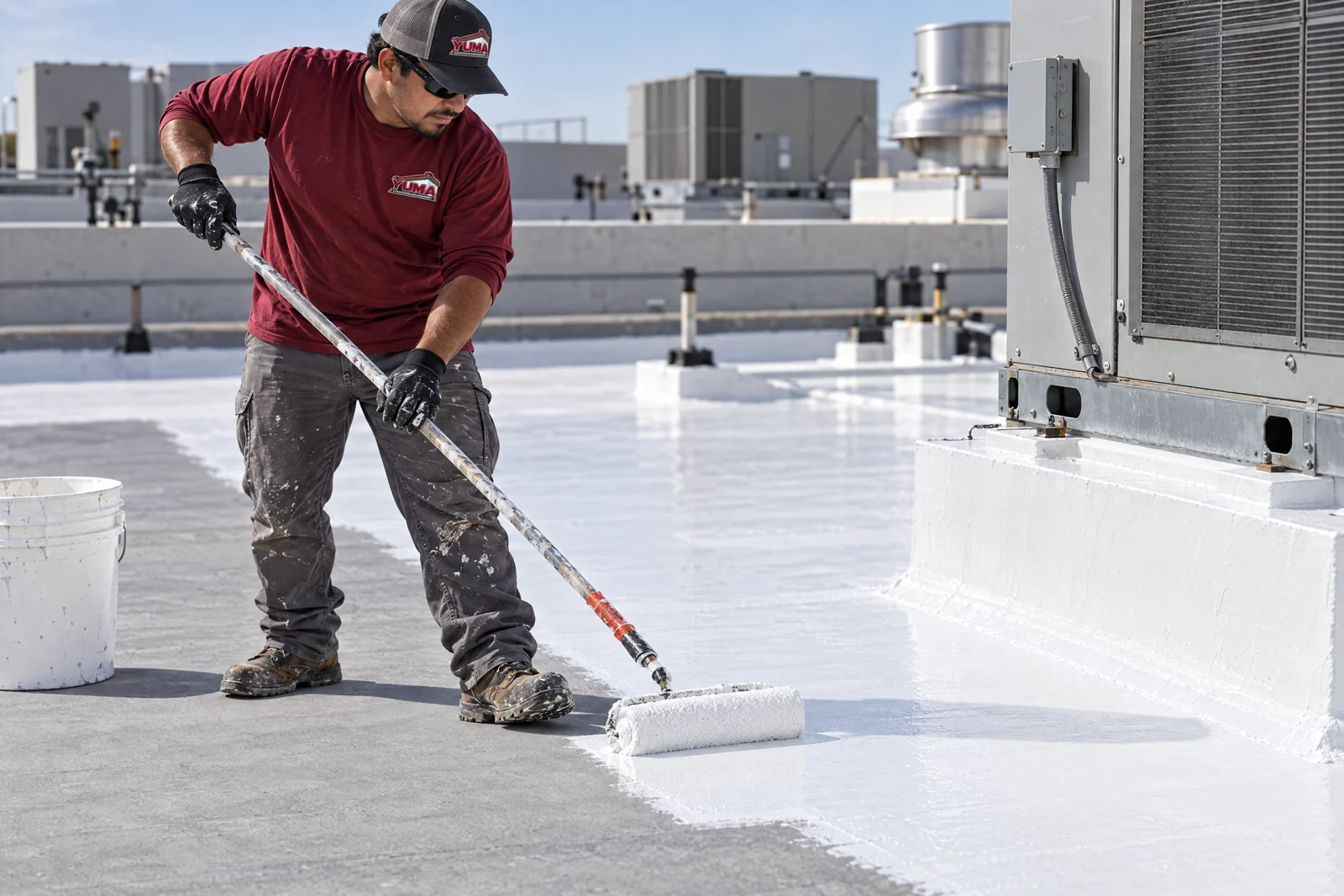
Worker rolling white coating around a commercial roof curb

Silicone Roof Coating

Silicone may suit a compatible commercial roof where sunlight and standing water matter. Drainage and the roof below still require inspection before selection.

Explore Silicone Roof Coating
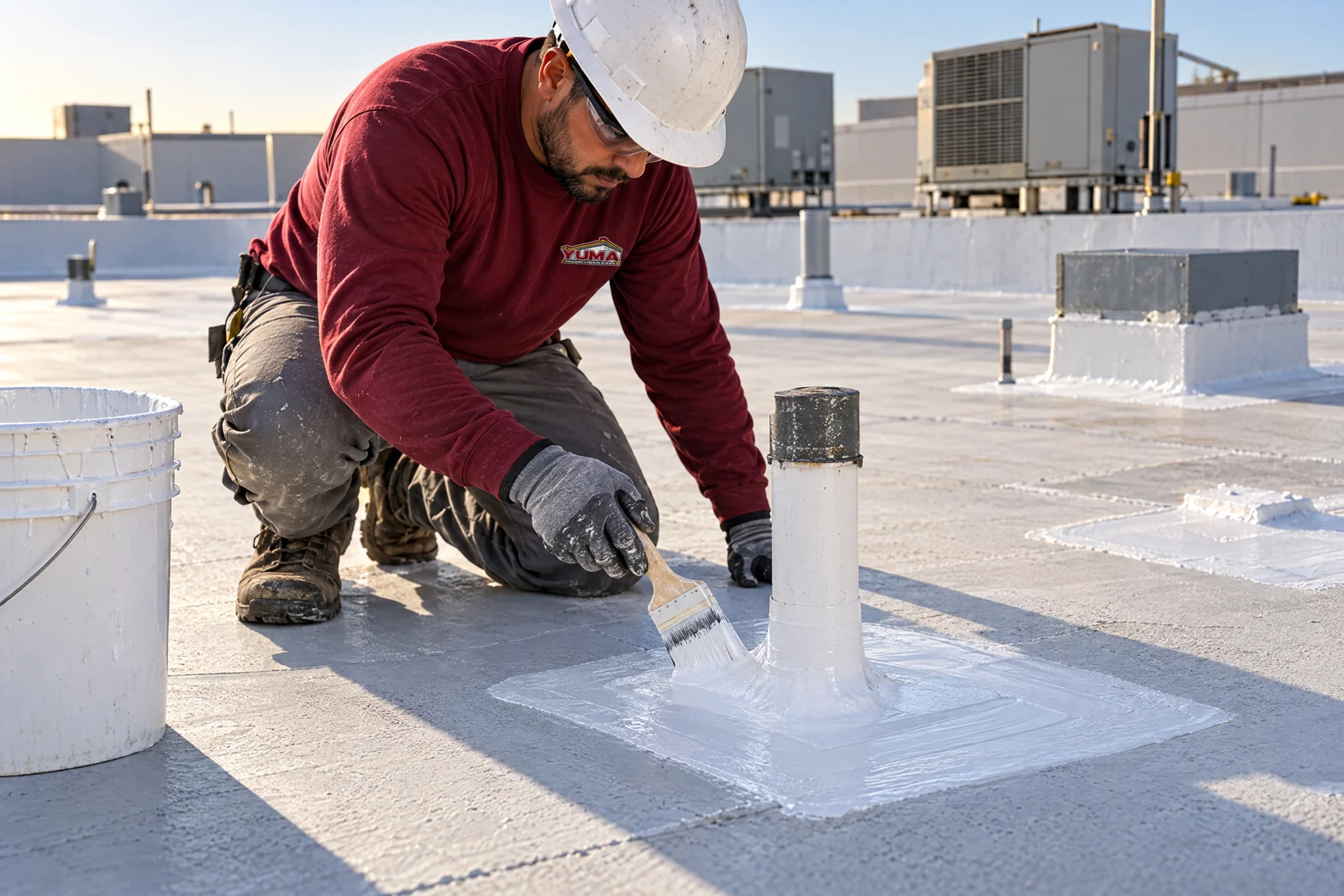
Worker brushing coating around a commercial roof penetration

Acrylic Roof Coating

Acrylic may work on a compatible roof with good drainage. Existing materials, previous coatings, low areas, and product drying requirements guide the decision.

Explore Acrylic Roof Coating
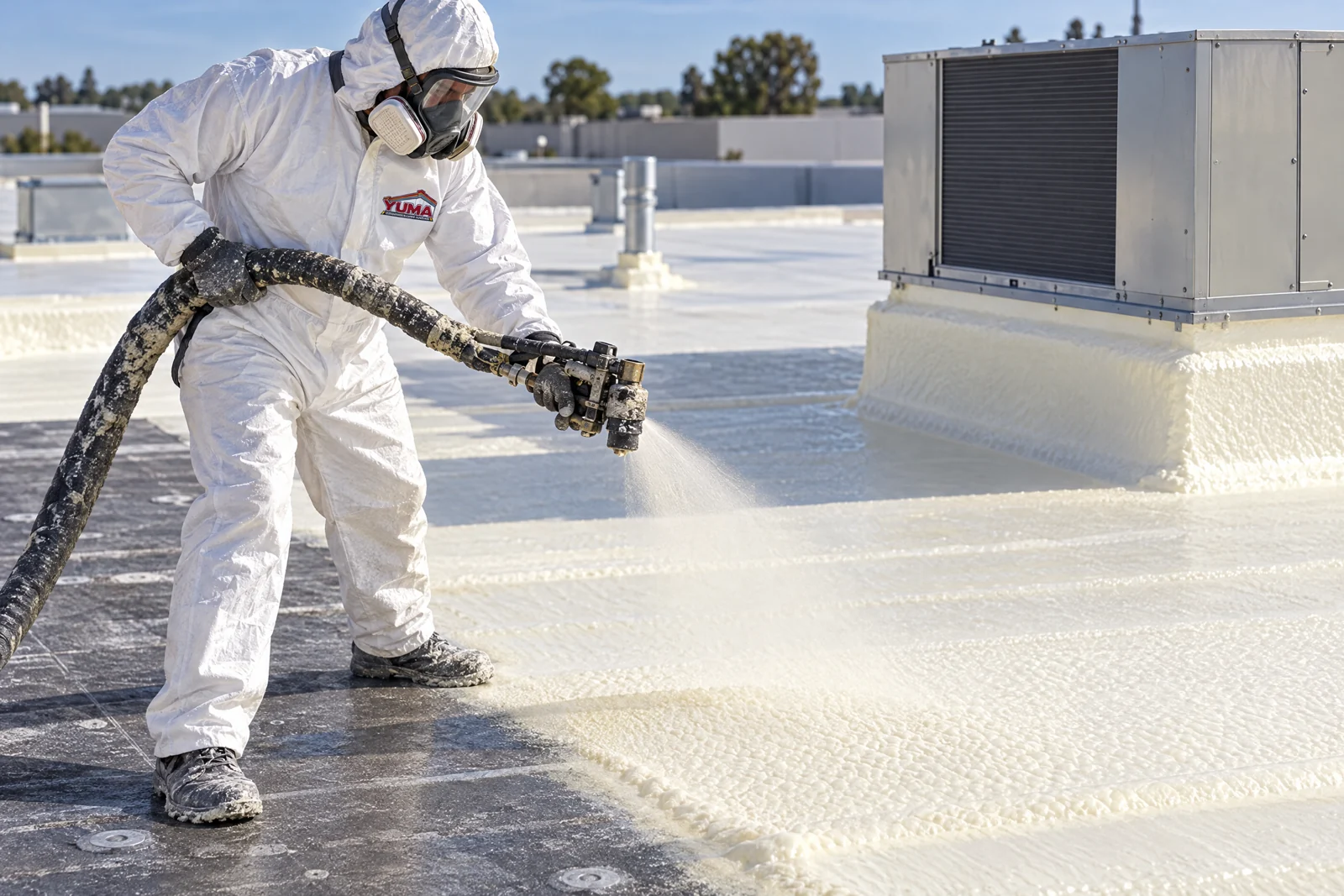
Protected worker applying foam on a commercial low-slope roof

Spray Foam Roofing

A sound foam roof may need repairs and a renewed protective coating rather than more foam everywhere. Wet, exposed, or damaged foam needs separate attention.

Explore Spray Foam Roofing
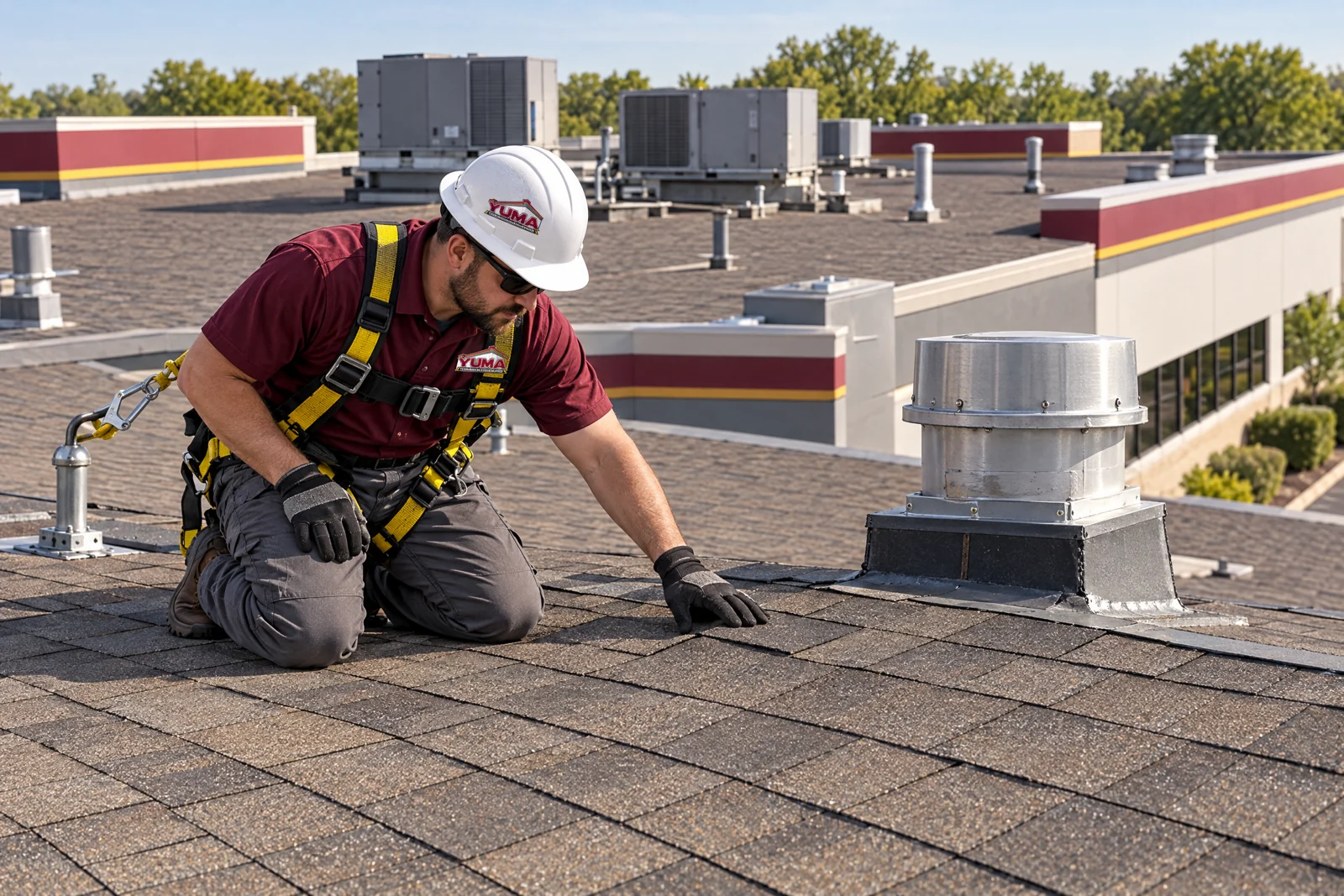
Worker inspecting shingles and flashing on a commercial building

Shingle Roof Coating

Commercial shingle roofs require a narrow suitability check, material compatibility review, and code consideration before any coating decision is made.

Explore Shingle Roof Coating

Fortuna Foothills Roof Coating Process

We coat commercial roofs in sequence: inspect the assembly, check moisture, address repairs and drainage, choose a compatible system, then verify coverage and details.

  1. 01

    Inspect Your Roof

    We identify the roofing material, surface condition, seams, fasteners, patches, penetrations, drains, low areas, equipment, and access limits. The inspection establishes what needs attention before coating.

  2. 02

    Check Moisture Below

    A dry top surface cannot confirm dry layers below. When roof history or visible conditions warrant it, moisture testing helps separate a coating-ready area from wet insulation or other hidden damage.

  3. 03

    Repair And Address Drainage

    Loose details, leaks, damaged metal, failing patches, and drainage concerns need their own work. Saturated insulation and damaged decking may make restoration unsuitable in affected areas.

  4. 04

    Select The Compatible System

    We compare the existing material, previous coatings, surface preparation, ponding exposure, and application conditions before choosing metal, silicone, acrylic, spray foam, or shingle work.

  5. 05

    Verify Coverage And Details

    Yuma County’s commercial-permit guidance covers non-residential work such as remodels and tenant improvements. Check the property’s applicable authority and proposed roof-work requirements. We then apply the selected coating to its coverage and thickness requirements, with connections around equipment, drains, pipes, and edges treated separately.

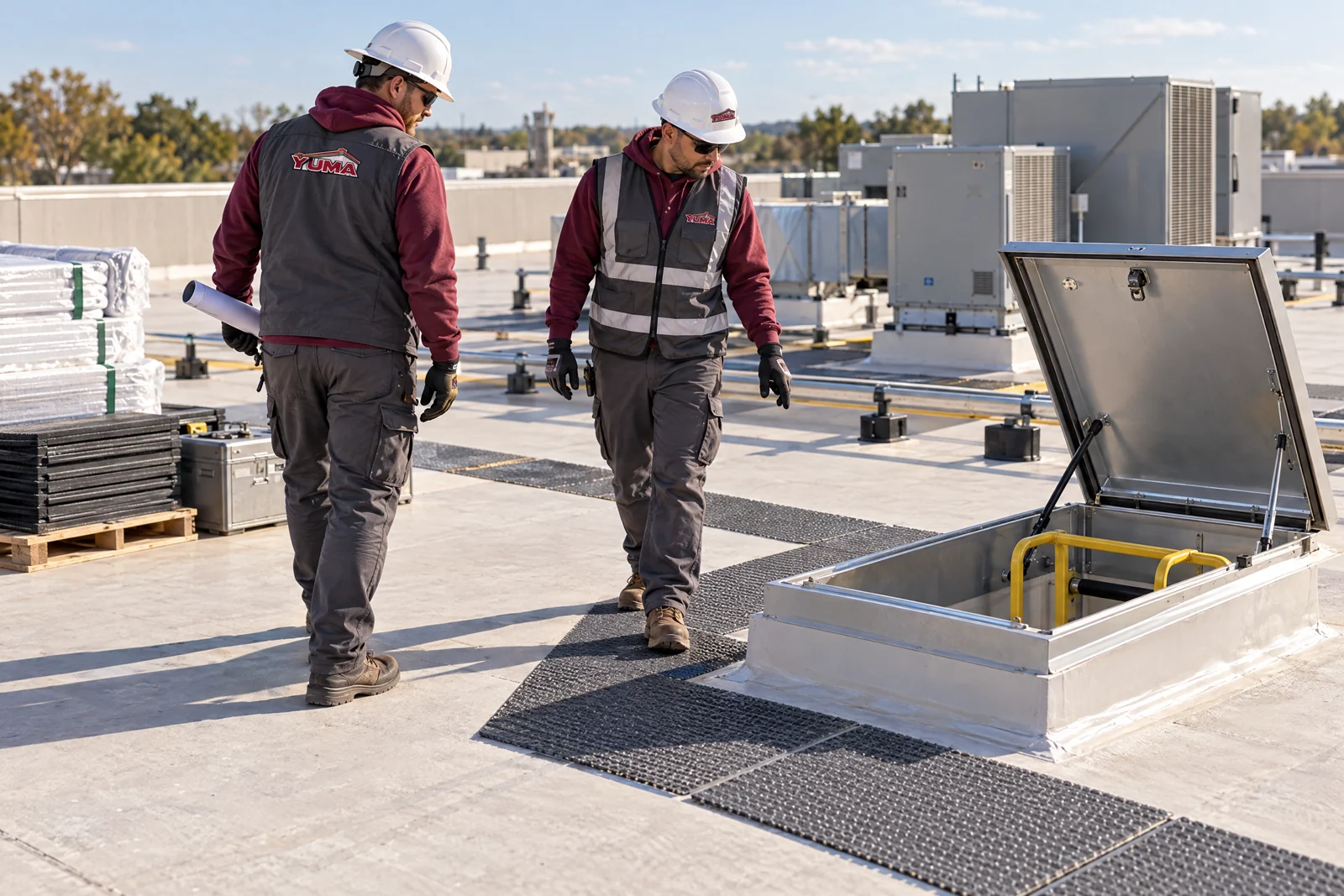
Roof access and material staging around commercial rooftop equipment

Fortuna Foothills Roof Coating Questions

Answers for property owners and facility managers separating dust, hidden moisture, drainage, and operating conditions.

Will Yuma’s Heat Dry Out Wet Insulation Before You Coat the Roof?

No, not automatically. A dry-looking surface does not prove insulation below the roof is dry. Testing may be needed when leaks, stains, soft areas, or roof history point underneath.

Saturated insulation generally needs removal and replacement before coating. Heat in Fortuna Foothills is not a substitute for checking the roof assembly.

The Coating Looks Gray From Dust. Does It Need Replacing?

Not necessarily. Dust can change a coating’s appearance without showing that it has failed. Cleaning may be the right first step before judging wear, loose areas, or damage.

We check the coating’s condition rather than applying another layer simply to restore a white appearance.

Can Dust Make A Coated Roof Look Worse Than It Is?

Yes. Dust can make a sound coating look dull, gray, or uneven, while it can also contaminate a roof prepared for new material. Appearance alone cannot establish failure.

We separate cleaning needs from adhesion, wear, and repair findings before selecting the next step.

How Do You Check For Moisture Below A Dry Roof Surface?

Moisture below a roof surface may require testing where leaks, stains, soft spots, prior repairs, or roof history point beneath the visible layer. A dry top surface does not confirm dry insulation.

The findings help separate coating-ready areas from materials that may need removal and replacement.

Can Ponding Water Be Solved With More Coating?

No. Silicone coating is not a roof-leveling material, and adding more coating does not replace a plan for getting water off the roof. Low areas need drainage review.

We trace where water collects and why before separating drainage work from a coating scope.

Can Roof Work Continue While Our Building And Equipment Remain In Use?

It depends on access, equipment locations, air intakes, deliveries, restricted areas, and the work sequence. Tell us which operations must continue and which roof zones need controlled access.

We can coordinate protection and access with the facility team. Do not assume every entrance, parking area, or equipment system stays unchanged.

Should We Check Permits Before Commercial Roof Coating In Fortuna Foothills?

Yes, confirm the applicable review path before work begins. Permit requirements depend on the property, the repair or coating scope, and the agencies reviewing that work.

Do not assume every commercial coating project has the same permit requirement. Confirm what applies to this Fortuna Foothills property.

Get A Fortuna Foothills Roof Coating Estimate

Get a roof-specific estimate after we separate dust, hidden moisture, repair boundaries, and system fit for the commercial property.

Call Us

Before You Go

Want To Talk About The Roof?

Leave a name and phone number, or call directly when you are ready.

Call Us

Read our Privacy Policy.