- 01
Inspect Your Roof
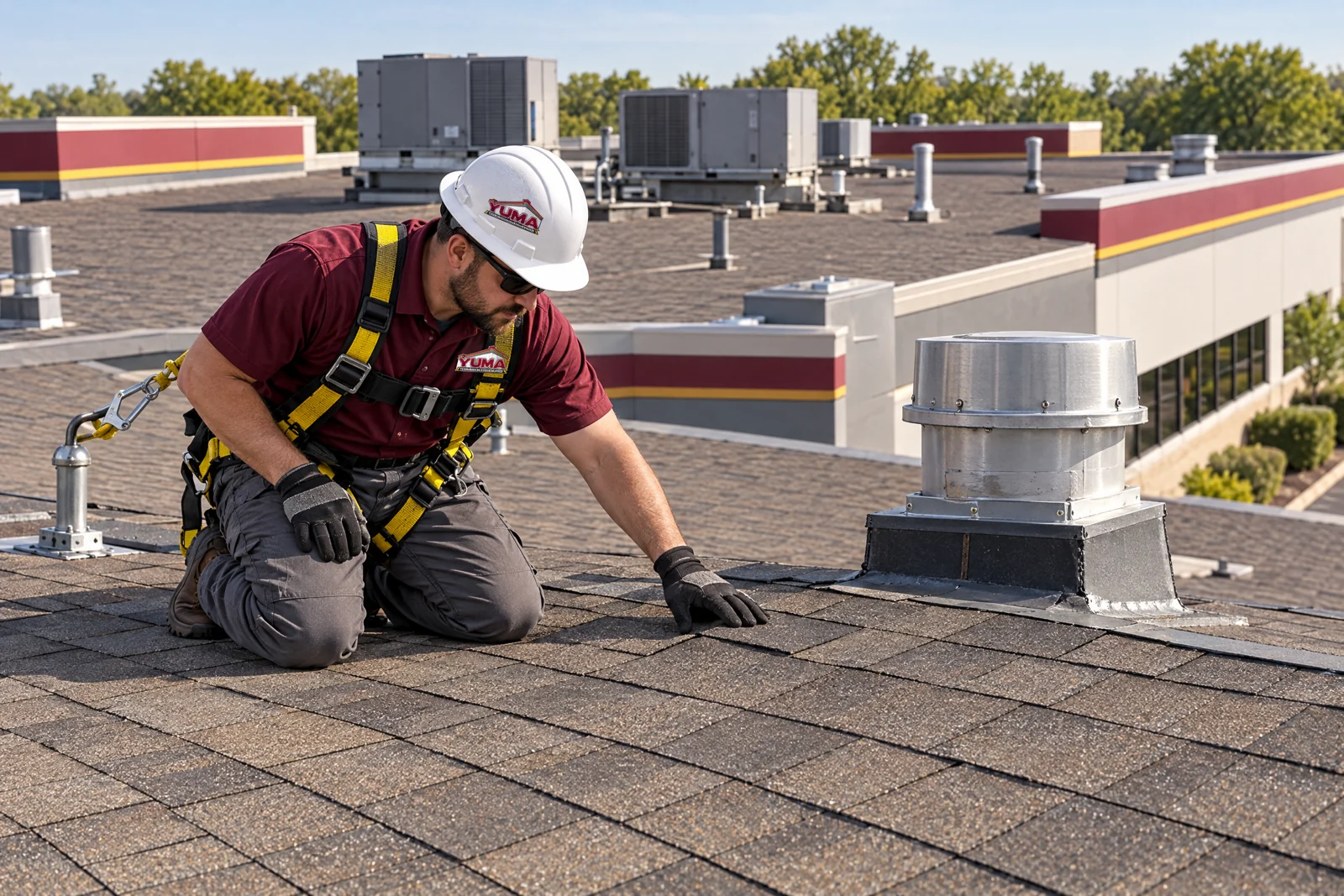
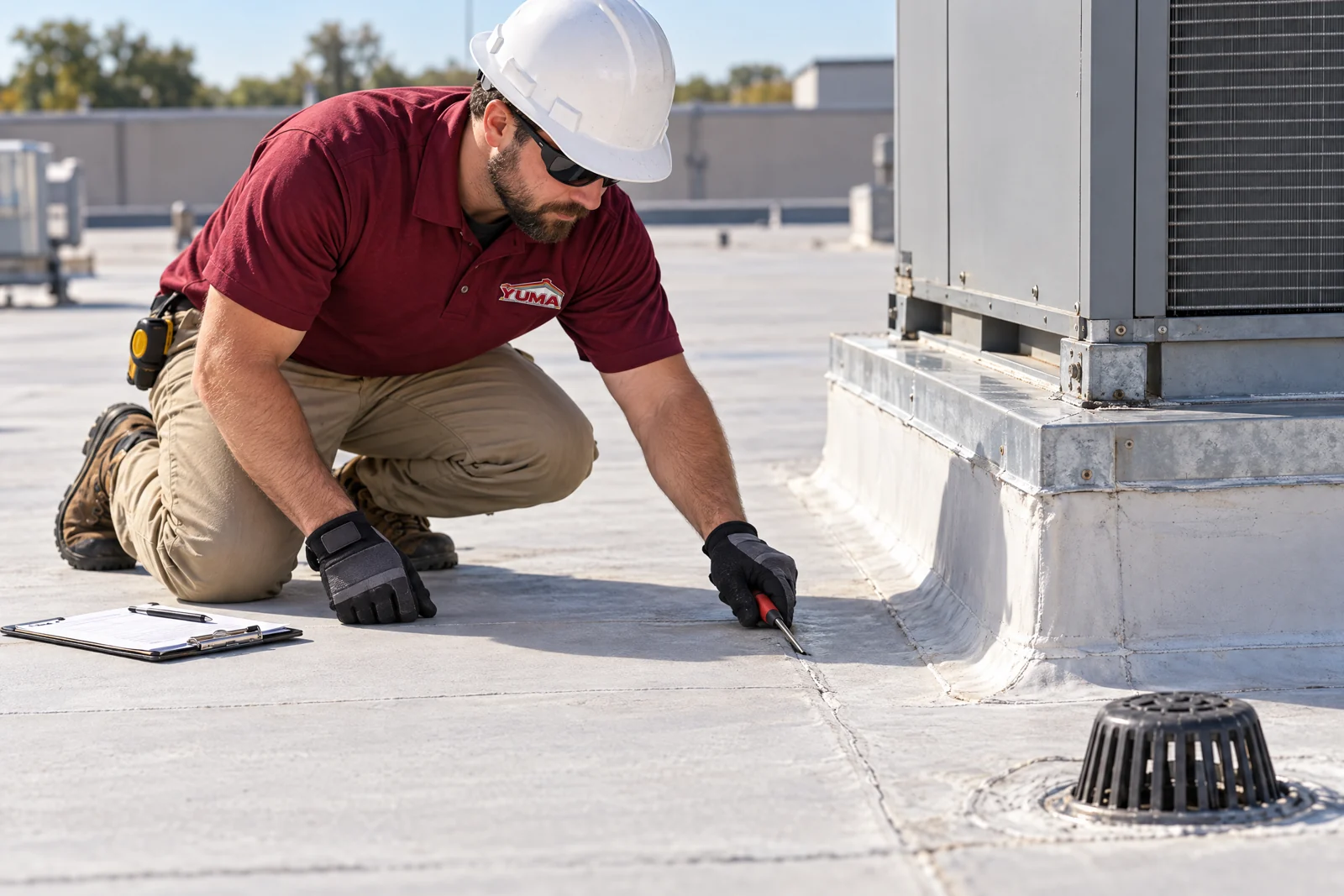
We identify the roofing material, visible damage, seams, fasteners, flashings, drains, penetrations, and equipment bases. We note leak locations, previous repairs, access limits, and areas needing closer investigation before selecting a coating. We record conditions that affect sequencing and work areas.
- 02
Identify Substrate And Moisture
A dry top surface does not prove that layers below are dry. We investigate uncertain or wet areas and separate sound roofing from saturated insulation, which generally needs removal and replacement before coating. Moisture findings control whether coating work can proceed.
- 03
Set Repair Boundaries
We separate coating-ready areas from leaks, loose materials, damaged decking, failing layers, low spots, and details needing repair. Coating follows required repairs; it does not hold loose panels together or rebuild a roof. That boundary protects the coating from covering unresolved roof problems.
- 04
Select A Compatible System
We compare the existing material, prior coatings, drainage, sunlight exposure, surface condition, and product requirements. Metal, silicone, acrylic, foam, and shingle routes each have different preparation and compatibility gates. The product is chosen after those checks, not before.
- 05
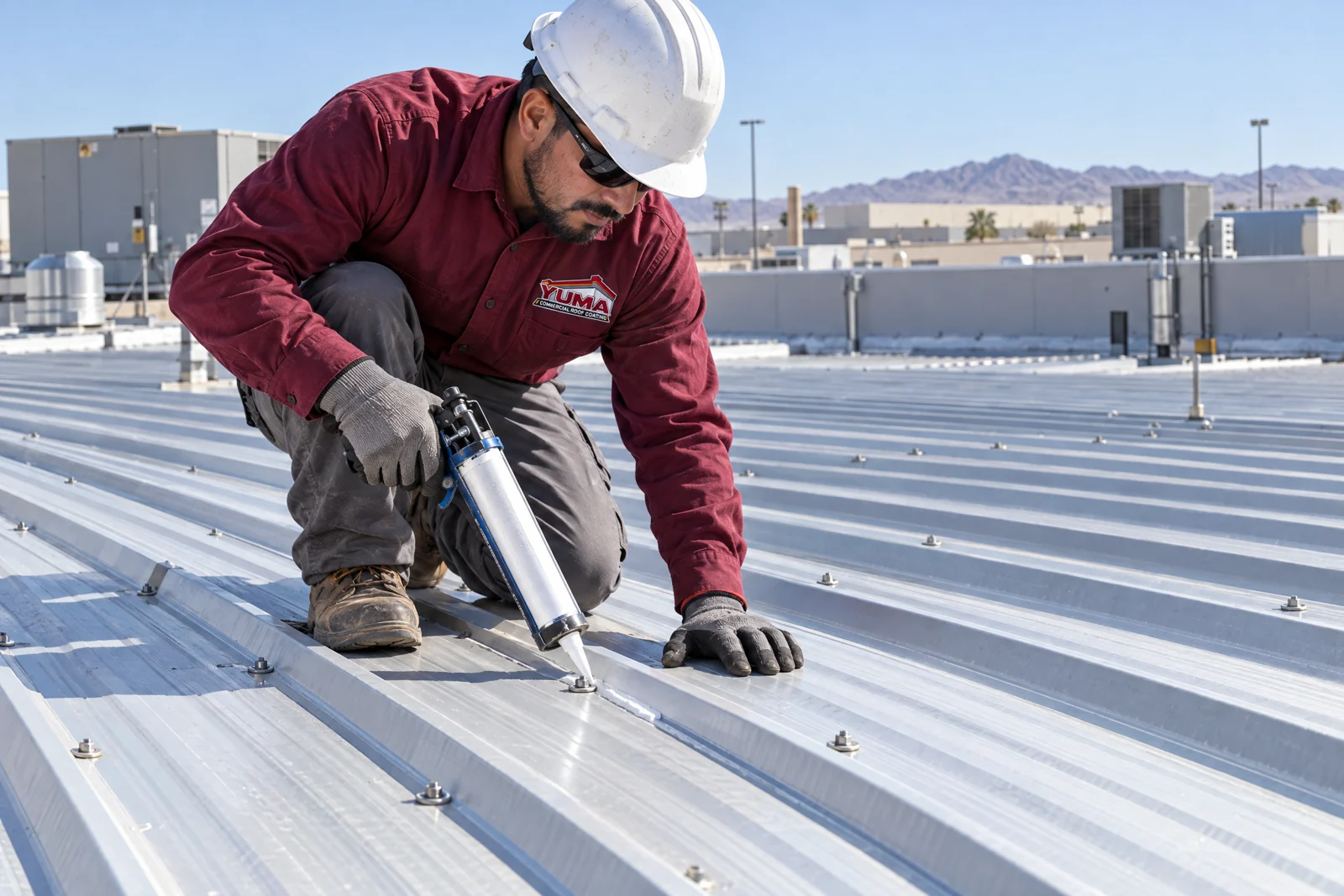
Prepare Details And Coordinate Access
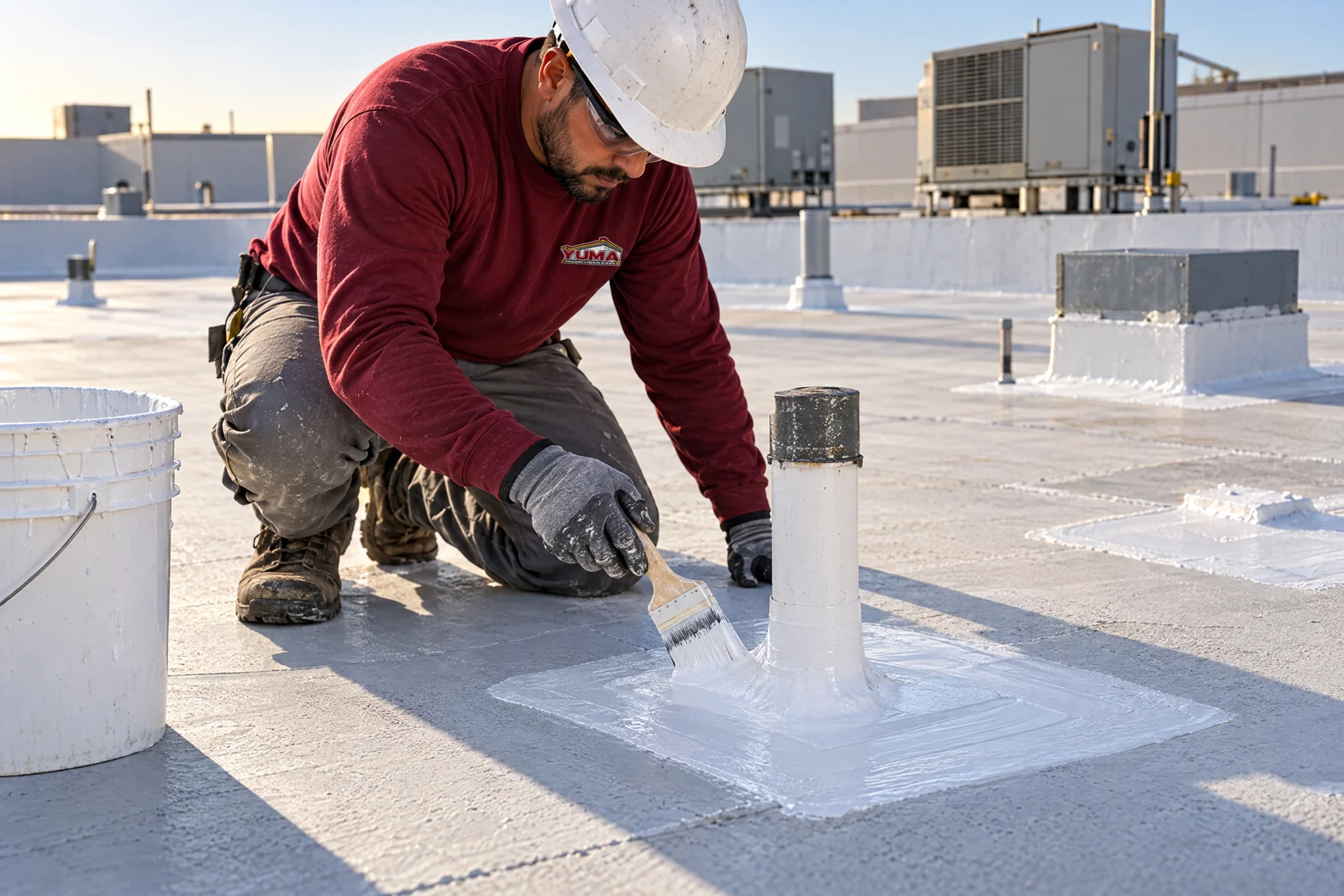
Preparation can include cleaning, repairs, primers, reinforcement, sealant, and treatment around edges, pipes, drains, and equipment bases. We account for roof access, deliveries, parking, HVAC intakes, tenants, and restricted areas. Detail work is part of preparation, not a finishing afterthought.
- 06
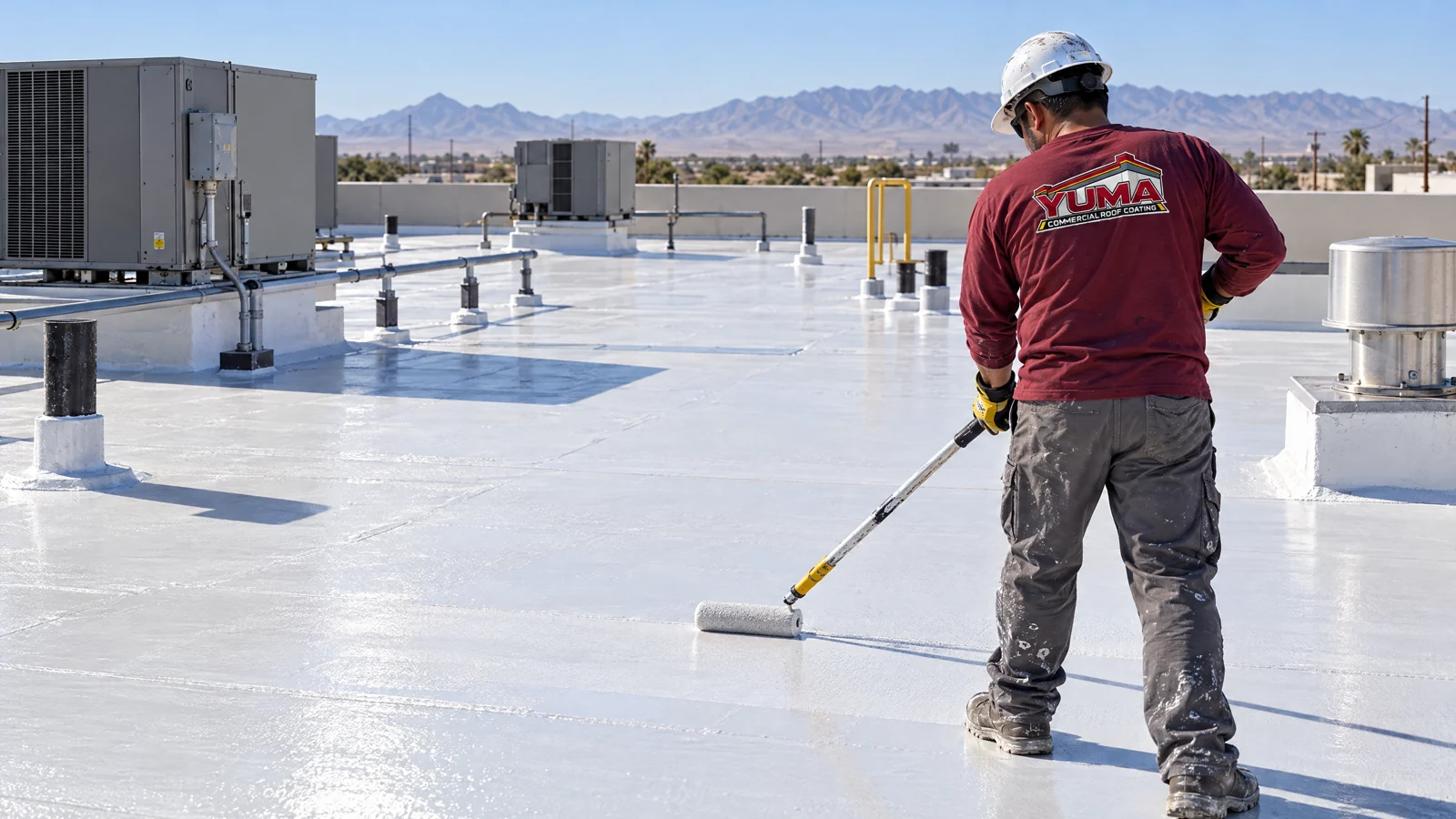
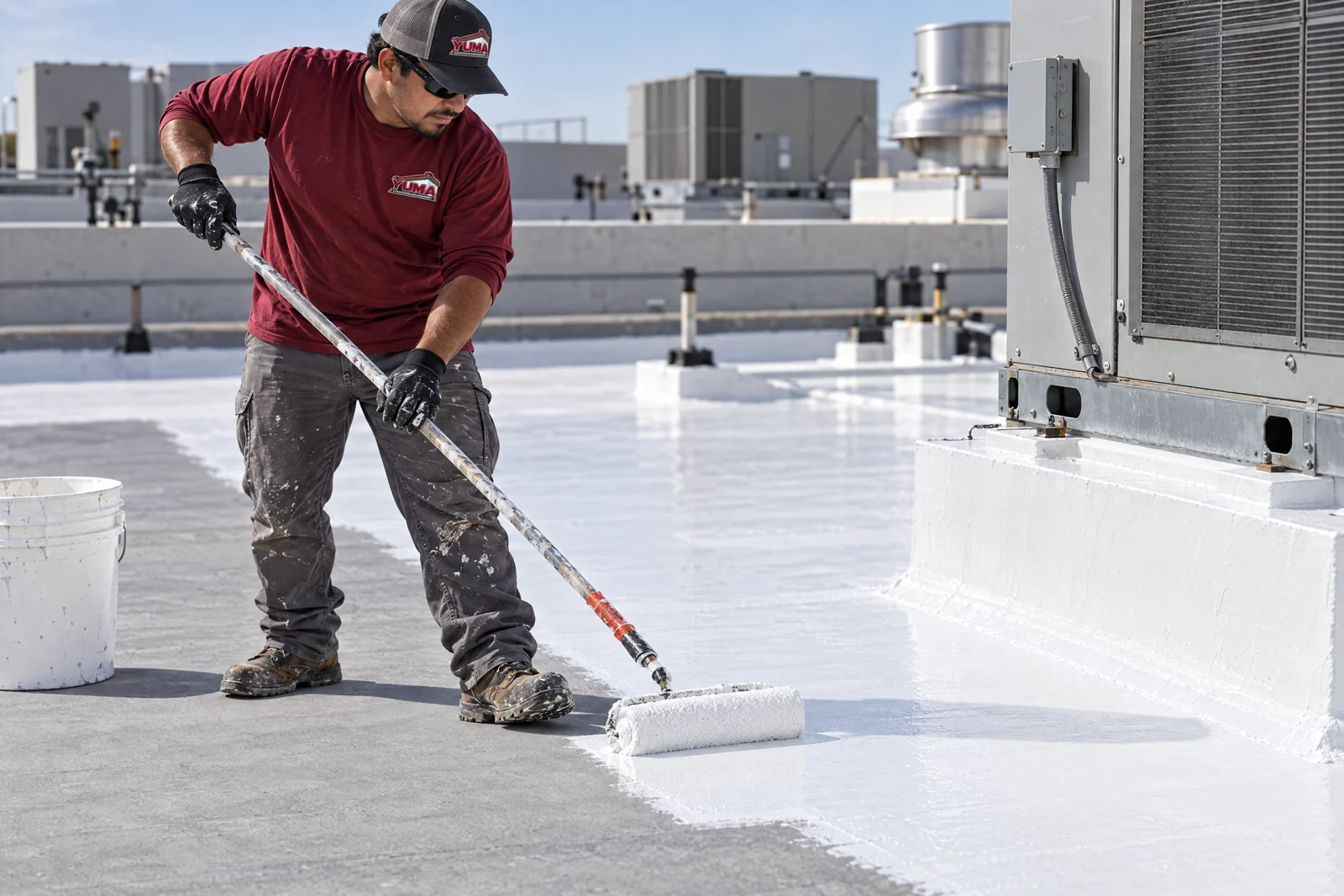
Apply, Check, And Plan Maintenance
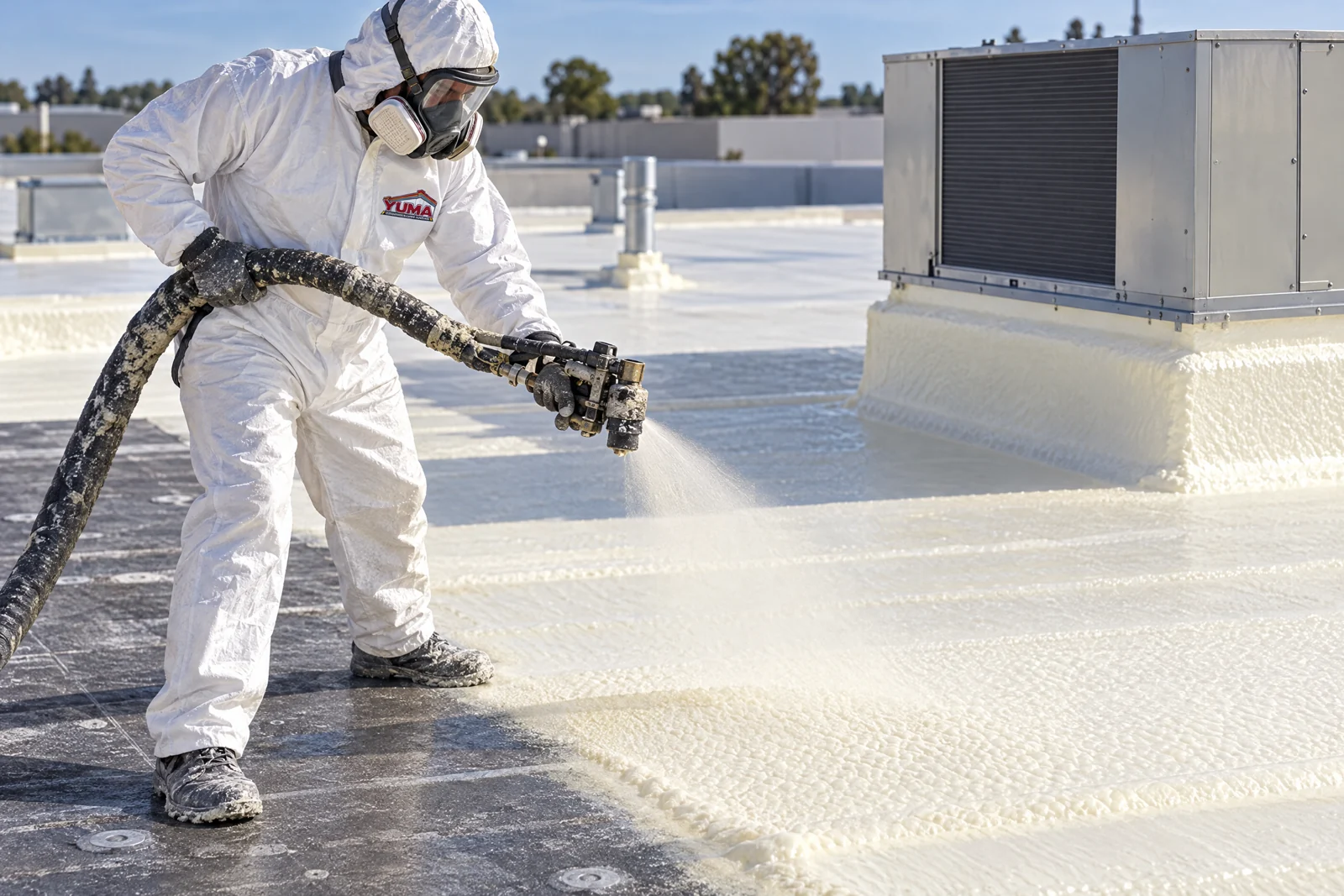
Application follows the selected system’s coverage and thickness requirements, not appearance alone. Wind, dust, heat, rain, and curing conditions matter. We also identify access rules and maintenance checks suited to the installed coating. Coverage checks help confirm that appearance is not the only measure.