Commercial Roof Coating · Yuma, AZ+1 (928) 430-5699
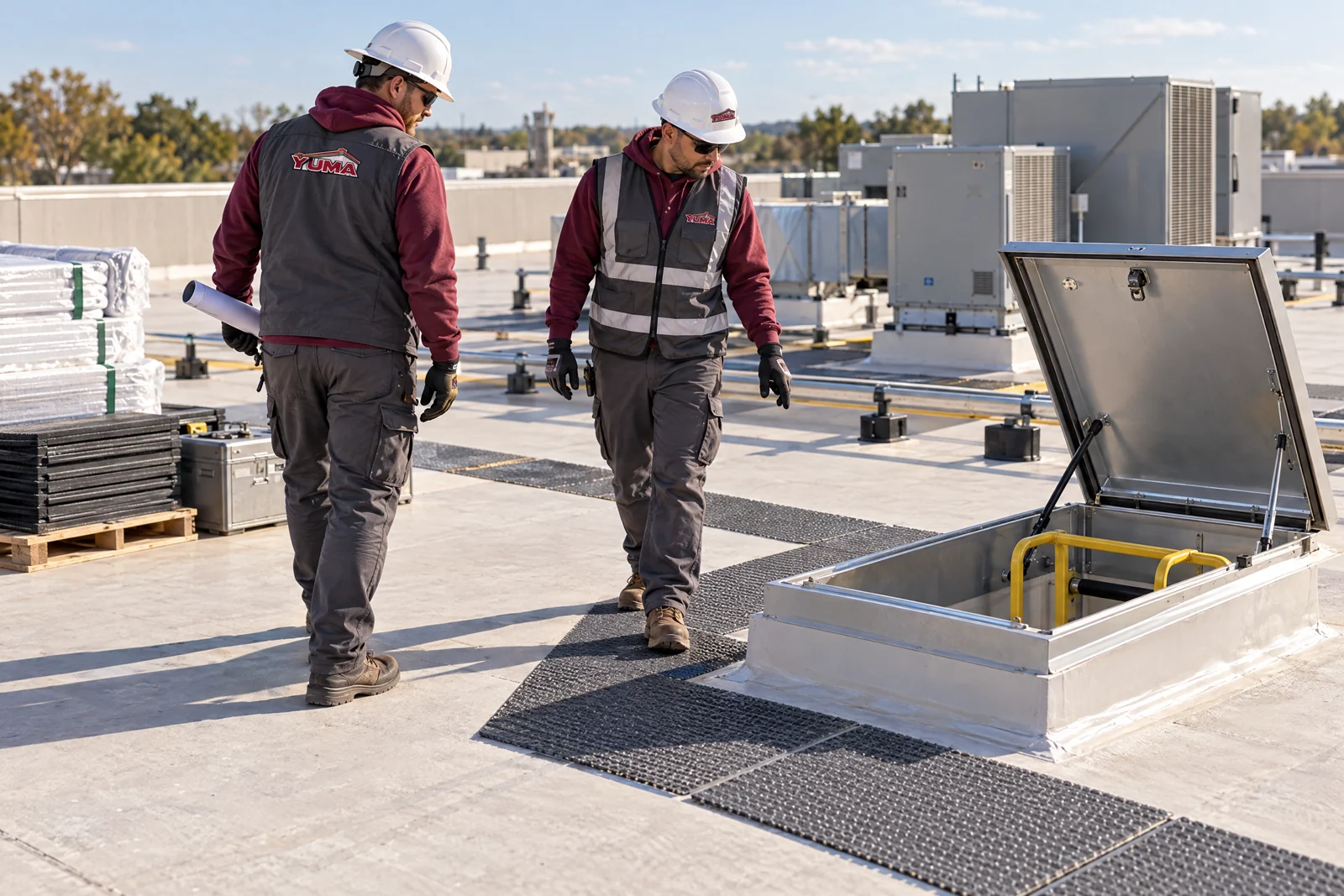
Roof access and material staging around commercial rooftop equipment

Commercial Roof Coating

Downtown Yuma Roof Coating

How Will Roof Access Work Around An Active Building?

We coat commercial roofs in Downtown Yuma, AZ after checking access, the existing assembly, repairs, drainage, and coating conditions before safe application.

Downtown Access And Existing Assemblies

Downtown Yuma roof coating starts with controlled access and assembly identification before any system is selected.

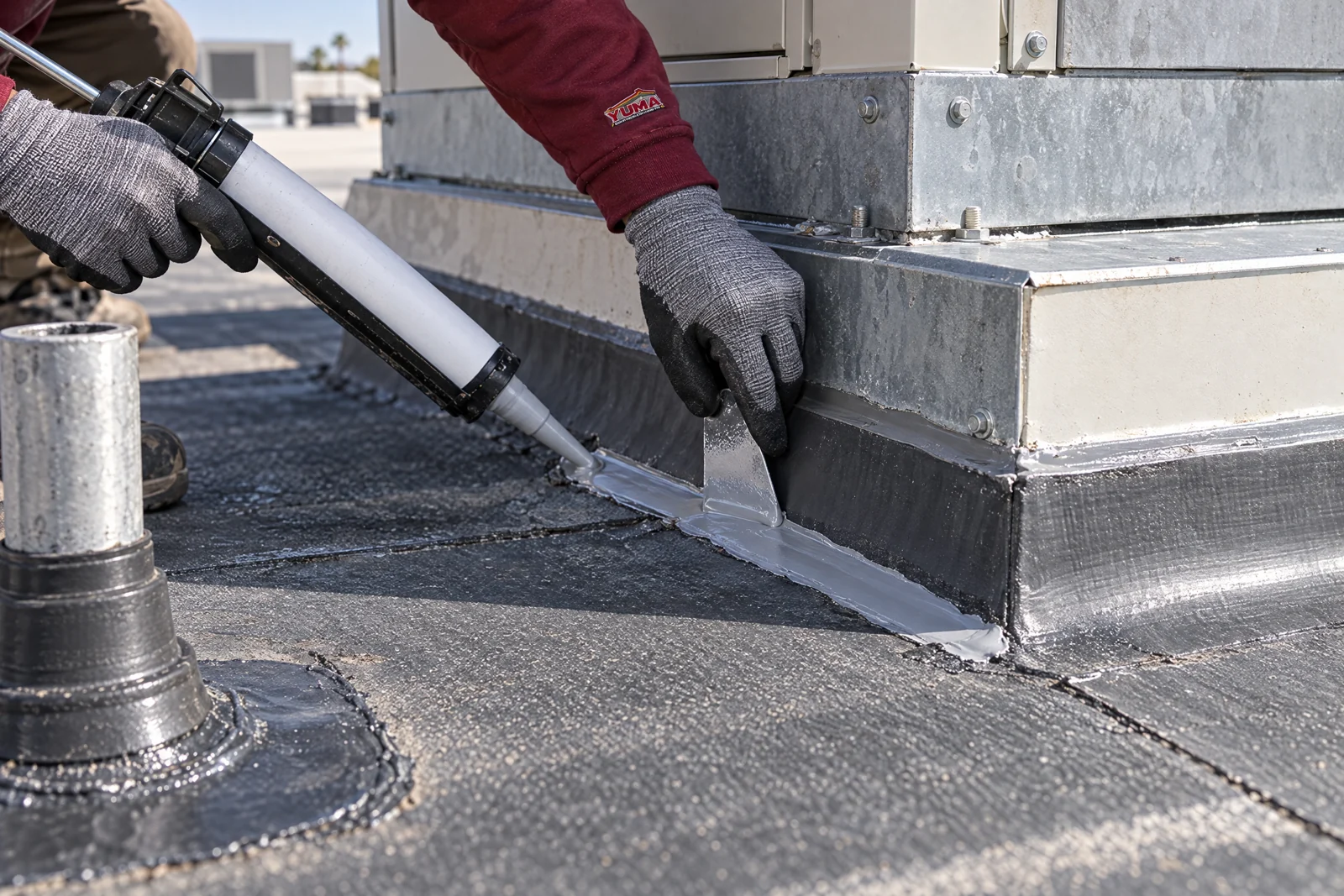
Gloved hands preparing flashing around a commercial roof curb

Active shopping, dining, and entertainment areas make roof entry, staging, material movement, and protected tenant, customer, delivery, and rooftop-equipment zones part of the work. We also identify who can authorize entry and where materials can be staged without blocking business activity.

City guidance says permit and inspection needs depend on scope; many construction, remodel, electrical, mechanical, and plumbing projects generally require them, while minor work may not. Historic-district or individually listed properties need a property-specific design check.

  • Identify the assembly before selecting a coating.
  • Mark seams, penetrations, drains, and equipment bases.
  • Separate public, tenant, delivery, and roof zones.
  • Confirm scope-dependent permit and historic-review questions.
Roof Conditions That Change The Coating Decision

A coating can protect a suitable roof, but it cannot rebuild damaged layers or make an unstable surface sound.

Loose Seams And Fasteners

Metal roofs need checks for open seams, loose or missing fasteners, panel movement, rust, and damaged sheet metal. Repairs and suitable primers may be required before coating. The coating protects repaired panels; it does not hold loose panels together or correct active movement.

Old Patches And Worn Coatings

Prior repairs can remain only when attached, compatible, and prepared correctly. Asphalt-based patches may need a bleed-blocking primer beneath a white coating. A worn surface may need cleaning, detail repair, or a full recoat after testing and adhesion checks.

Drains And Ponding

Low areas and standing water change the system decision. Silicone may resist standing water on a suitable roof, but extra coating does not level a roof or replace drainage work. We check where water collects, how long it remains, and why it cannot leave.

Gravel Or Layered Assemblies

A standard coating application does not go over loose gravel as though it were a smooth membrane. Gravel-covered or layered roofs may need special preparation or another restoration method after the assembly is identified and its condition is checked.

Wet Insulation Or Damaged Decking

A dry top surface does not prove that insulation below is dry. Moisture testing may be needed. Widespread wet insulation, damaged decking, or separating roofing can make repair, removal, or replacement more appropriate than coating the upper surface.

Benefits of Coating Your Roof

Coating is useful when the existing roof is sound enough to keep. These benefits depend on inspection, repairs, preparation, and a compatible system.

Keep Sound Roofing In Place

When suitable roofing stays in place, coating can avoid some removal and rebuilding work, which may reduce material and labor needs. That opportunity disappears when moisture, decking, seams, penetrations, or failing layers make restoration unsound. Inspection determines what can remain.

Reduce Tear-Off Disruption

A qualifying restoration may involve less demolition, debris handling, and disruption than rebuilding the entire roof. Cleaning, repairs, access controls, and equipment protection still require planning around tenants, customers, deliveries, and active downtown operations. Less demolition does not mean no disruption.

Discard Less Usable Roofing

When inspection finds roofing that can remain serviceable, less usable material may be discarded than with a full tear-off. The amount avoided depends on the roof findings. Coating is not a zero-waste promise when wet insulation or failing layers need removal; damaged material still needs a proper solution.

Keep A Recoat Option

A compatible coating may provide another restoration option later when its condition allows. Future recoating is assessed through inspection and preparation; it is not a promise that the roof will never need replacement or that products can be layered together. Maintenance records help guide that later check.

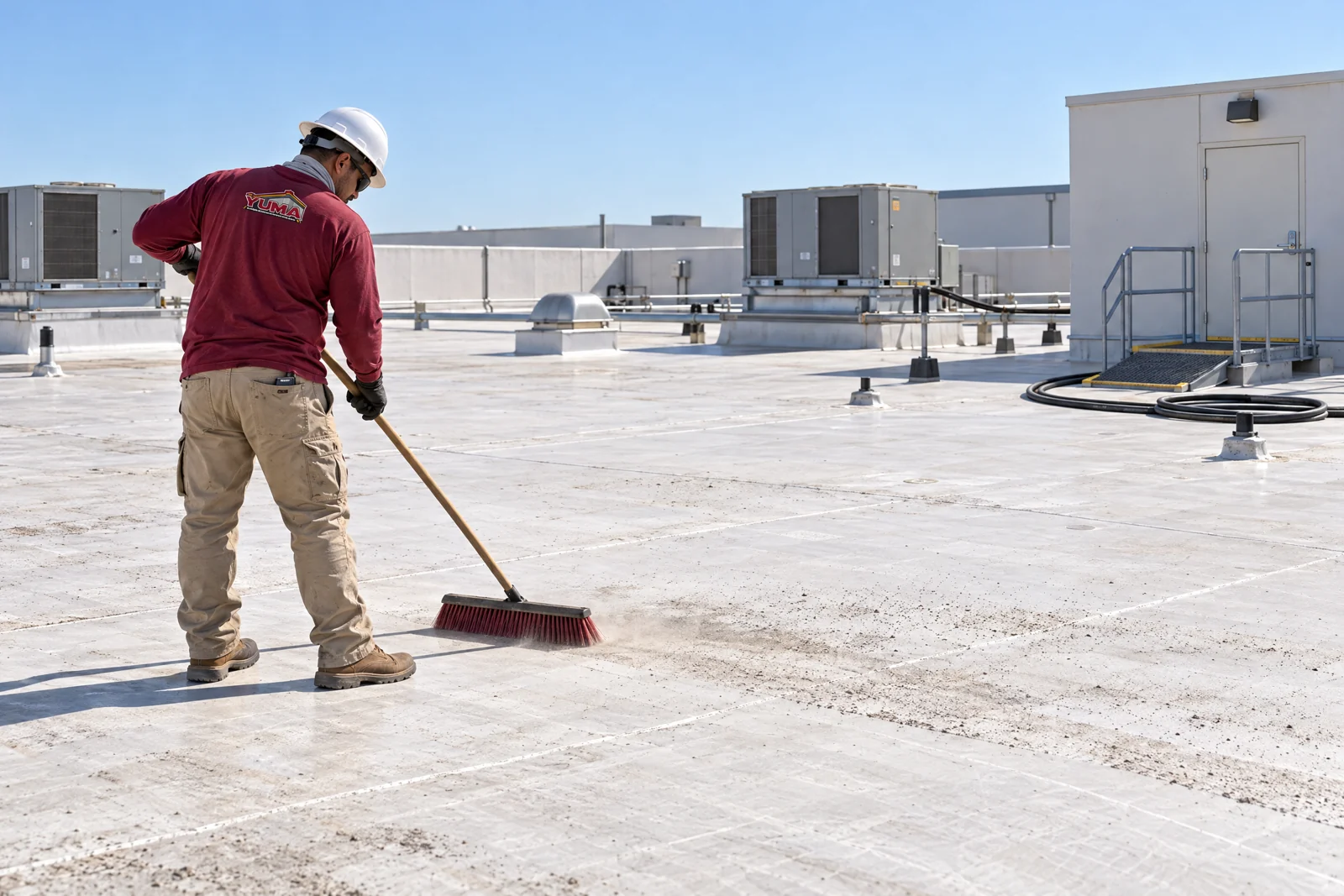
Worker clearing surface dust from a commercial roof

Commercial Roof Coating Options for Downtown Yuma

The existing material, moisture condition, drainage, repair history, and application limits determine which commercial coating service fits.

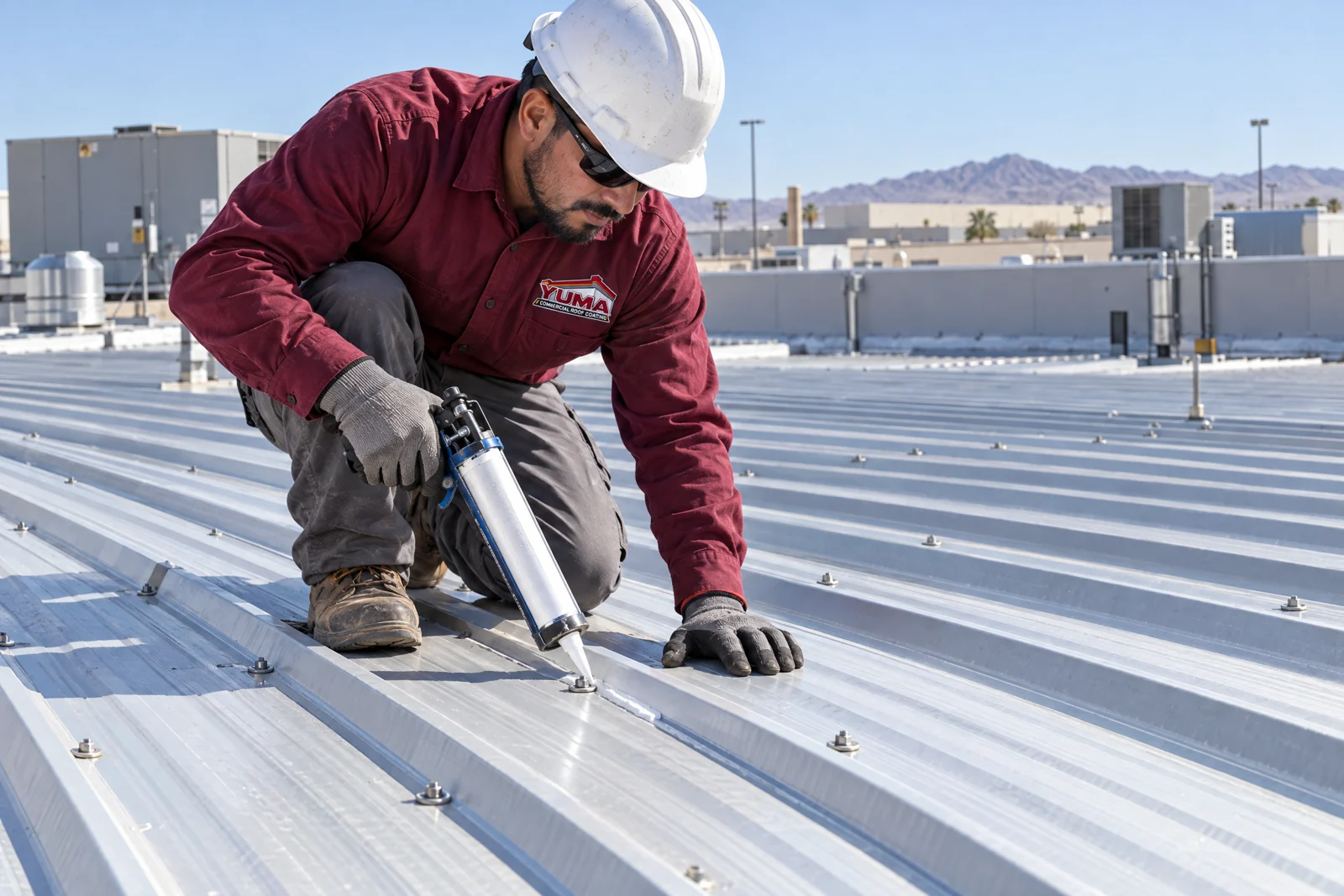
Worker sealing a joint on commercial metal roof panels

Metal Roof Coating

Fits repairable metal after seams, fasteners, rust, and panel condition are addressed. Repairs and suitable primers may be needed; loose panels and damaged sheet metal need work first. Penetrations and edge details also need attention.

Explore Metal Roof Coating
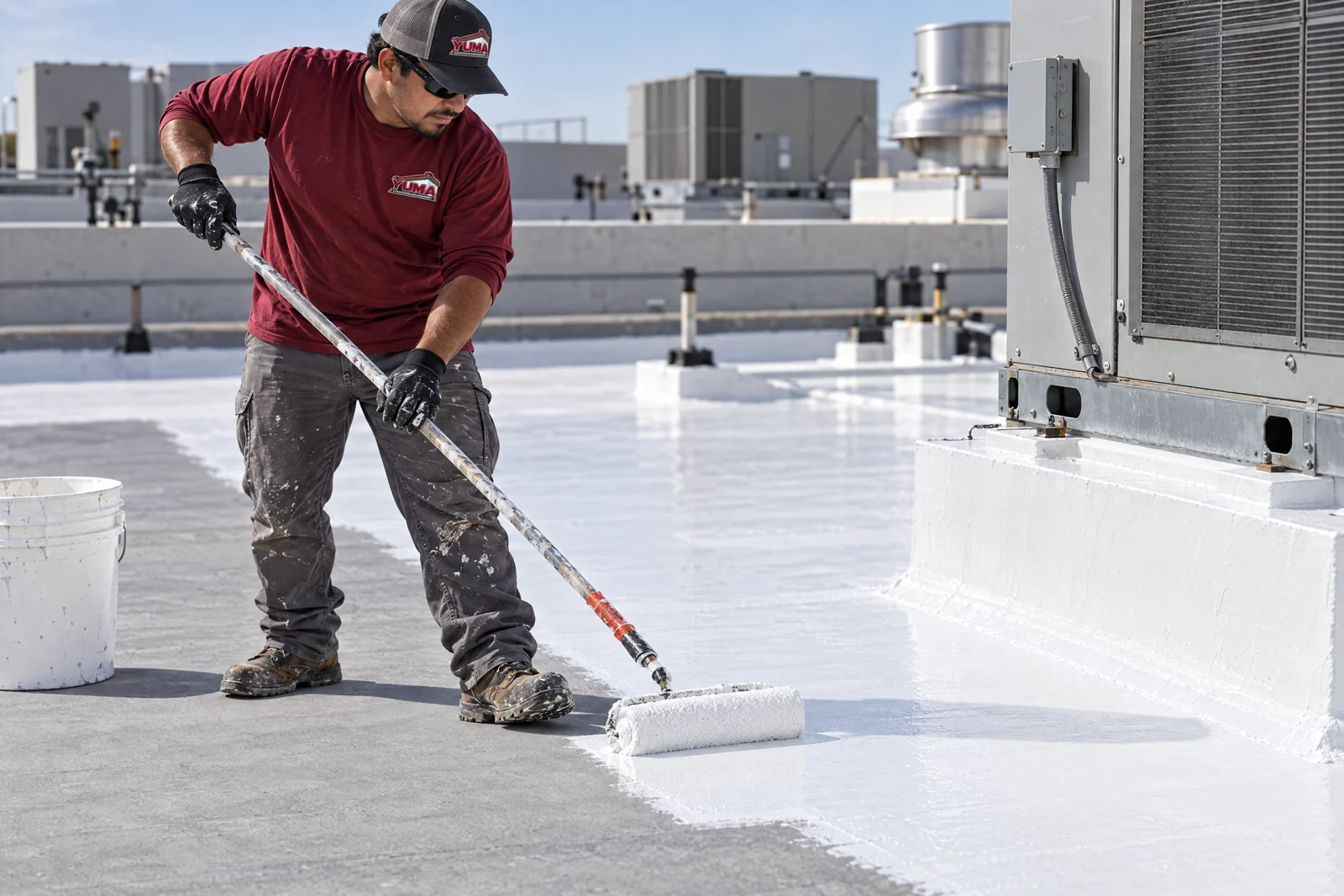
Worker rolling white coating around a commercial roof curb

Silicone Roof Coating

May suit a compatible low-slope roof where ponding and sunlight matter. It can resist standing water on a suitable roof, but it does not make damaged or poorly draining roofing ready. Moisture and prior coating compatibility still matter.

Explore Silicone Roof Coating
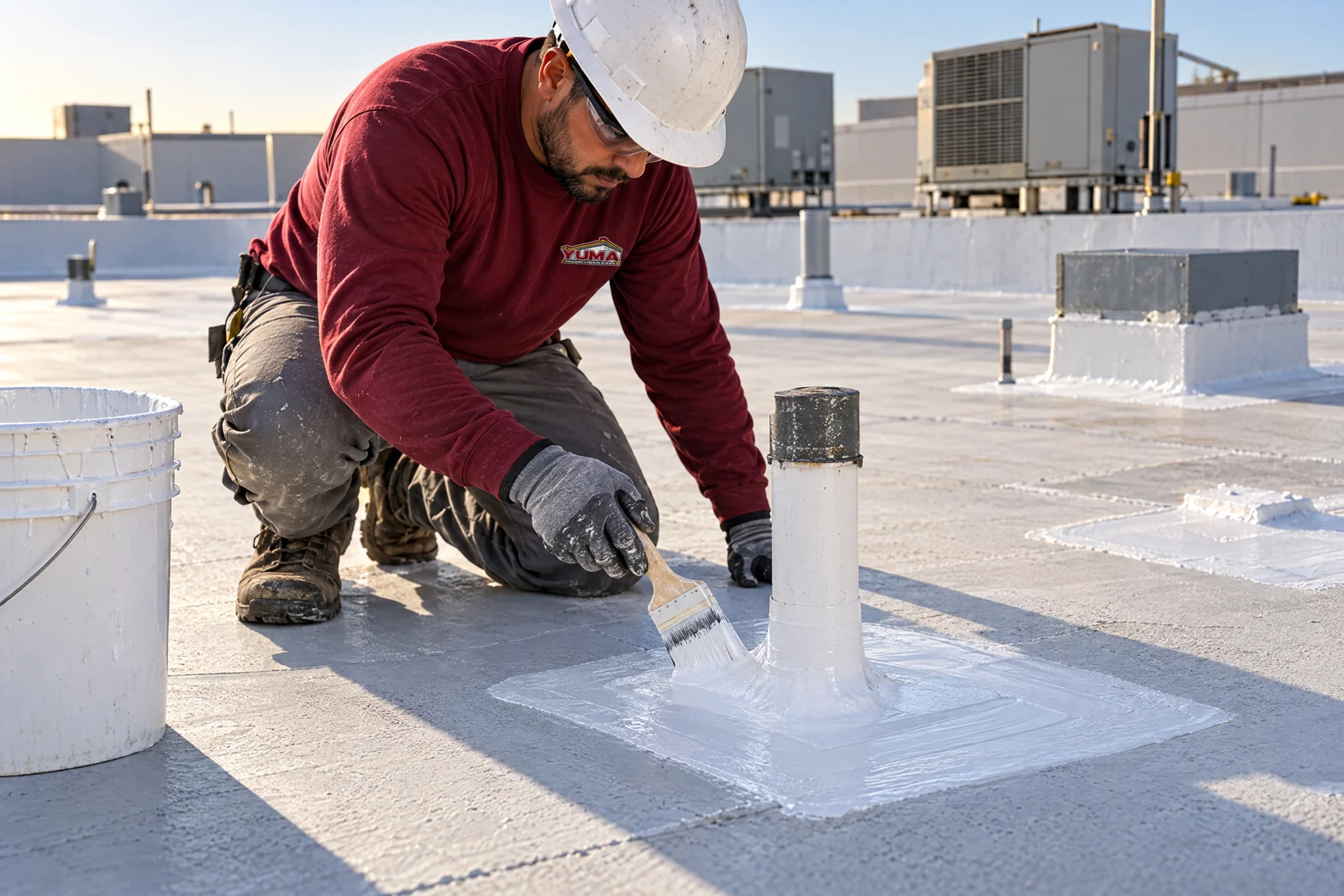
Worker brushing coating around a commercial roof penetration

Acrylic Roof Coating

May work on a compatible roof with good drainage and suitable drying conditions. Existing material, prior coatings, and weather limits still need checking before application. Water-based application conditions can change the work window.

Explore Acrylic Roof Coating
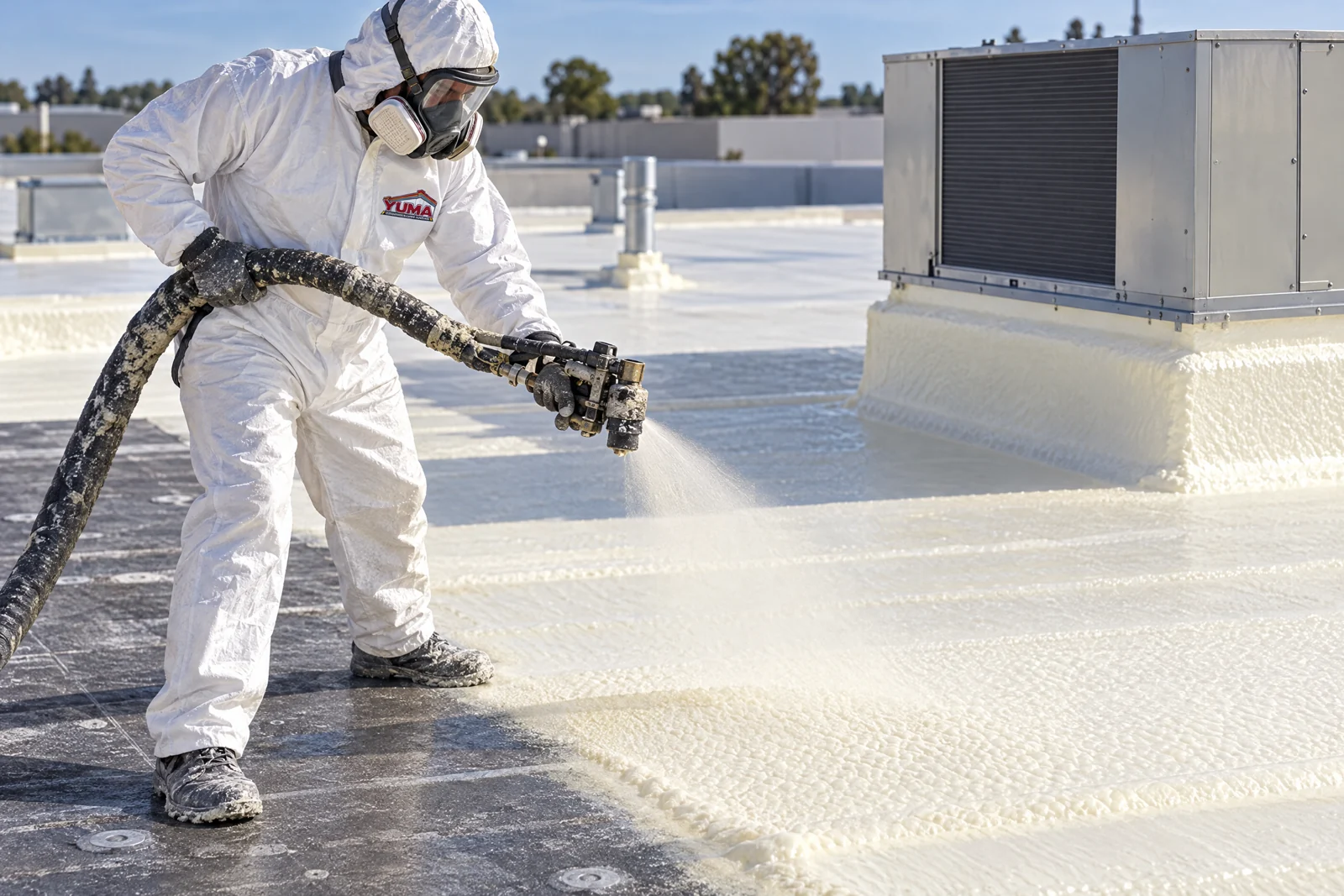
Protected worker applying foam on a commercial low-slope roof

Spray Foam Roofing

Sound existing foam may need repairs and a renewed protective coating. Wet, exposed, or damaged foam needs separate attention before deciding whether additional foam is appropriate. Rooftop equipment and overspray controls also affect preparation.

Explore Spray Foam Roofing
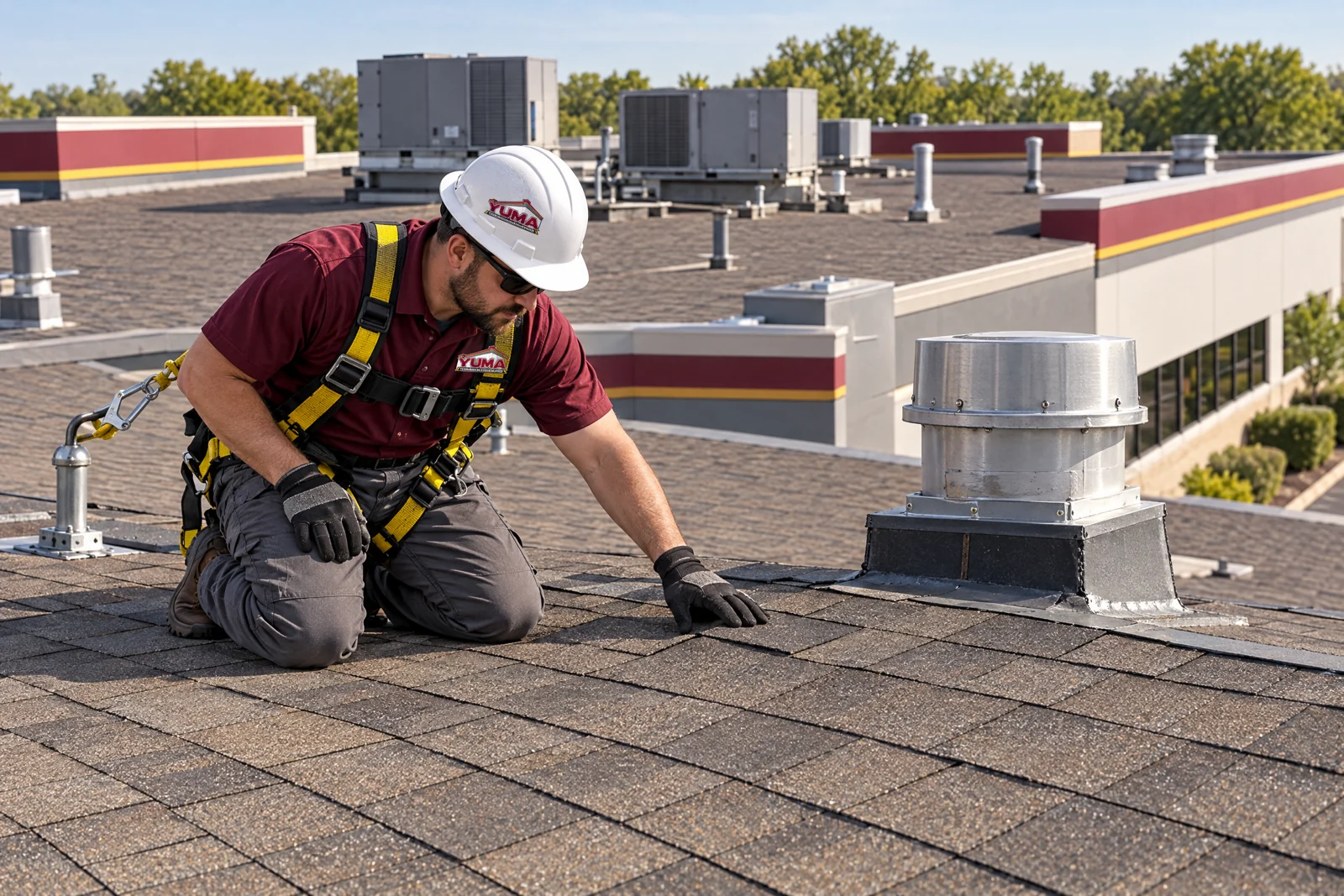
Worker inspecting shingles and flashing on a commercial building

Shingle Roof Coating

Requires a narrow compatibility and condition check. Repair or replacement may be more suitable than coating the existing shingle system when the assembly is not a sound base. The roof material and proposed system must be checked before application.

Explore Shingle Roof Coating

Work Sequence Around An Active Downtown Property

The work sequence protects the roof decision and gives the property team clear points for access, repairs, application, and return to service.

  1. 01

    Inspect Your Roof

    We identify the roofing material, inspect seams, fasteners, flashing, penetrations, drains, patches, and visible coating wear. Moisture or substrate concerns guide needed testing before a system is selected. Findings separate coating-ready areas from repair or replacement areas.

  2. 02

    Confirm Assembly And Access

    We match roof condition to the building plan. The property team identifies roof-entry controls, equipment that must remain active, delivery windows, tenant concerns, customer paths, and areas that must stay clear. This sequence keeps access decisions tied to the actual property.

  3. 03

    Repair And Prepare

    Loose materials, leaks, damaged details, and incompatible repairs receive attention before the main coating. Cleaning and surface preparation create the base needed for the selected product, primer, sealant, or reinforcement. Preparation must leave the surface ready for application.

  4. 04

    Apply In Suitable Conditions

    Application follows the selected system’s coverage, thickness, temperature, wind, dust, and drying or curing limits. Downtown staging stays controlled while the roof surface is prepared and coated. Work pauses when conditions could contaminate the surface or affect curing.

  5. 05

    Check Details And Return Access

    We check edges, drains, pipes, equipment bases, seams, and other connections that may need different detail treatment. Roof access returns only when the coating has cured enough for its intended use and maintenance plan. The property team should retain the agreed access guidance.

Downtown Yuma Roof Coating Questions

What Do You Need From Us to Arrange a Roof Inspection?

Start with the Downtown Yuma property address, your contact details, and the reason you are calling. Tell us who can provide roof access and whether restricted areas exist.

Photos, maintenance records, repair receipts, and warranty documents help when available, but they are not required before contacting us. Identify equipment, tenant, delivery, or customer areas needing protection.

Does a Cooler Roof Surface Mean the Inside Will Be Just as Much Cooler?

No. Roof-surface temperature and indoor temperature are different measurements. A reflective coating can lower roof-surface temperature, but insulation and the rest of the building affect interior heat.

We do not turn reflectivity into a promise about room temperature or utility bills. A property without air conditioning cannot claim cooling-system savings from a reflective roof.

Will Downtown Yuma Coating Work Always Need A Permit?

Not always. Permit and inspection requirements depend on the property, scope, and work involved, so coating is not automatically exempt or automatically required.

City guidance says many construction, remodel, electrical, mechanical, and plumbing projects generally require permits and inspections, while minor work may not. Confirm the scope with the City.

How Can Tenants And Customers Keep Using The Building?

Access needs a property-specific work plan. Share work hours, roof-entry restrictions, delivery arrangements, customer paths, and areas that must remain clear.

The sequence may protect loading docks, parking, entrances, air intakes, or rooftop equipment. Identify one property contact, and do not assume every area stays available throughout the work.

Can Historic Review Affect A Downtown Roof-Coating Scope?

It can, depending on the property. A building in a reviewed historic district, or an individually listed or contributing property, may need a property-specific design check before exterior work is finalized.

The City identifies downtown districts and listed properties, but that does not establish blanket approval or denial. Confirm building status and scope before work begins.

What If Nobody Knows The Existing Roof Assembly?

We identify the assembly before selecting a coating. Inspection looks at visible materials, layers, seams, patches, penetrations, drains, and substrate concerns, with testing when the condition calls for it.

A gravel-covered, wet, layered, or deteriorating assembly may need special preparation, repair, removal, or replacement instead of standard coating. Unknown does not mean coating-ready.

Get A Free Estimate For Your Downtown Yuma Roof

Tell us about the commercial roof, access conditions, repairs, and building operations. We will start with the roof you have and the work it needs.

Call Us

Before You Go

Want To Talk About The Roof?

Leave a name and phone number, or call directly when you are ready.

Call Us

Read our Privacy Policy.