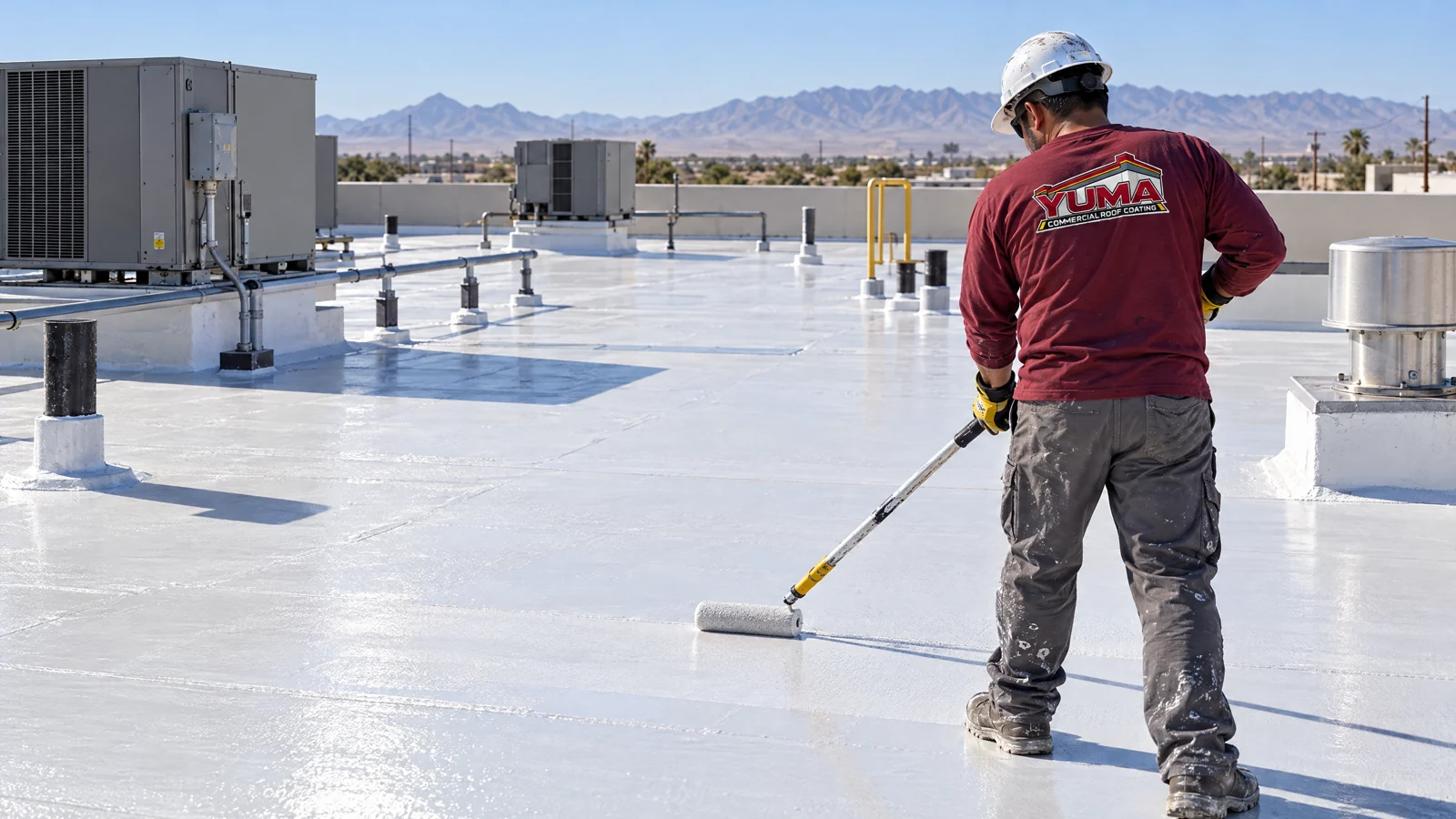
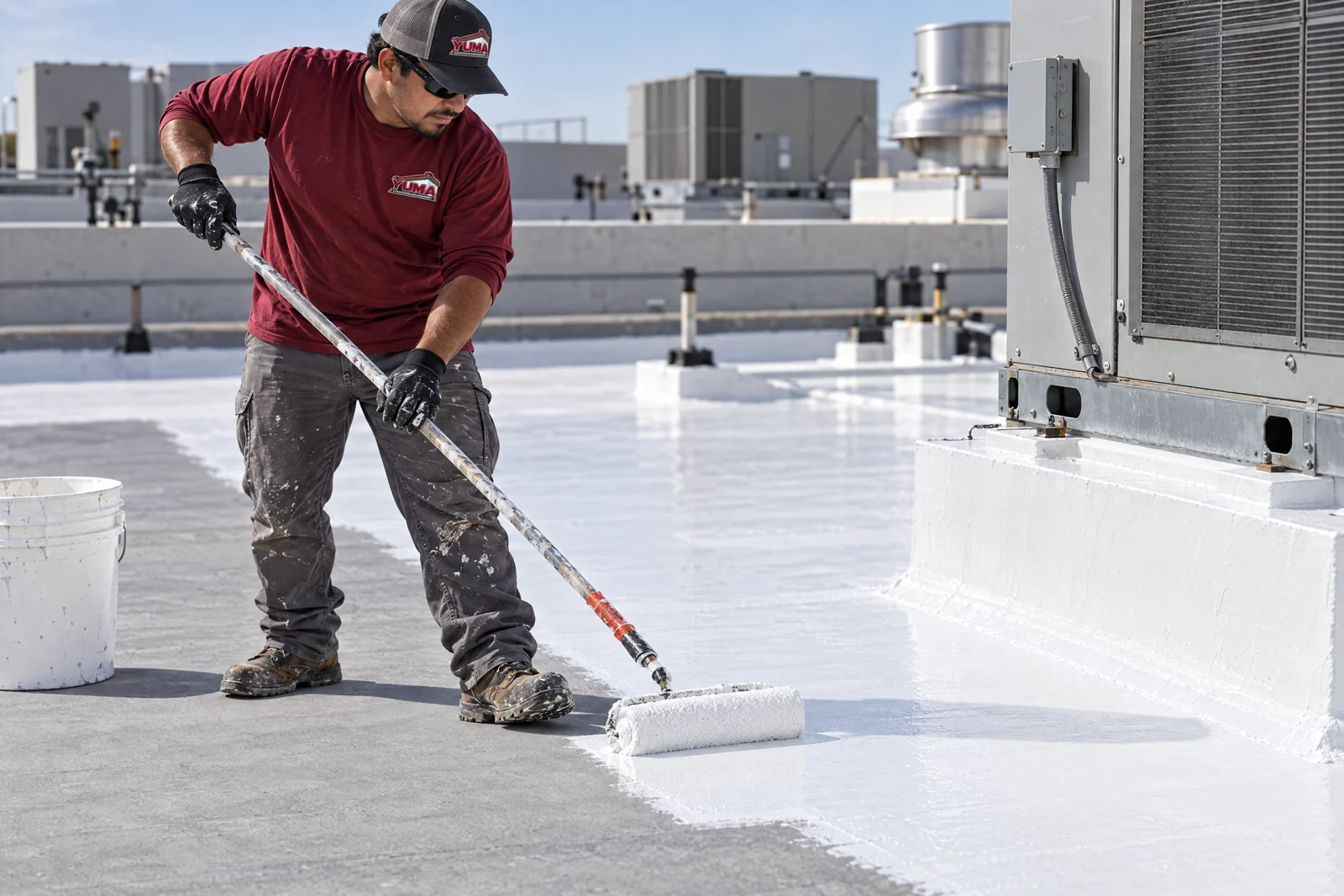
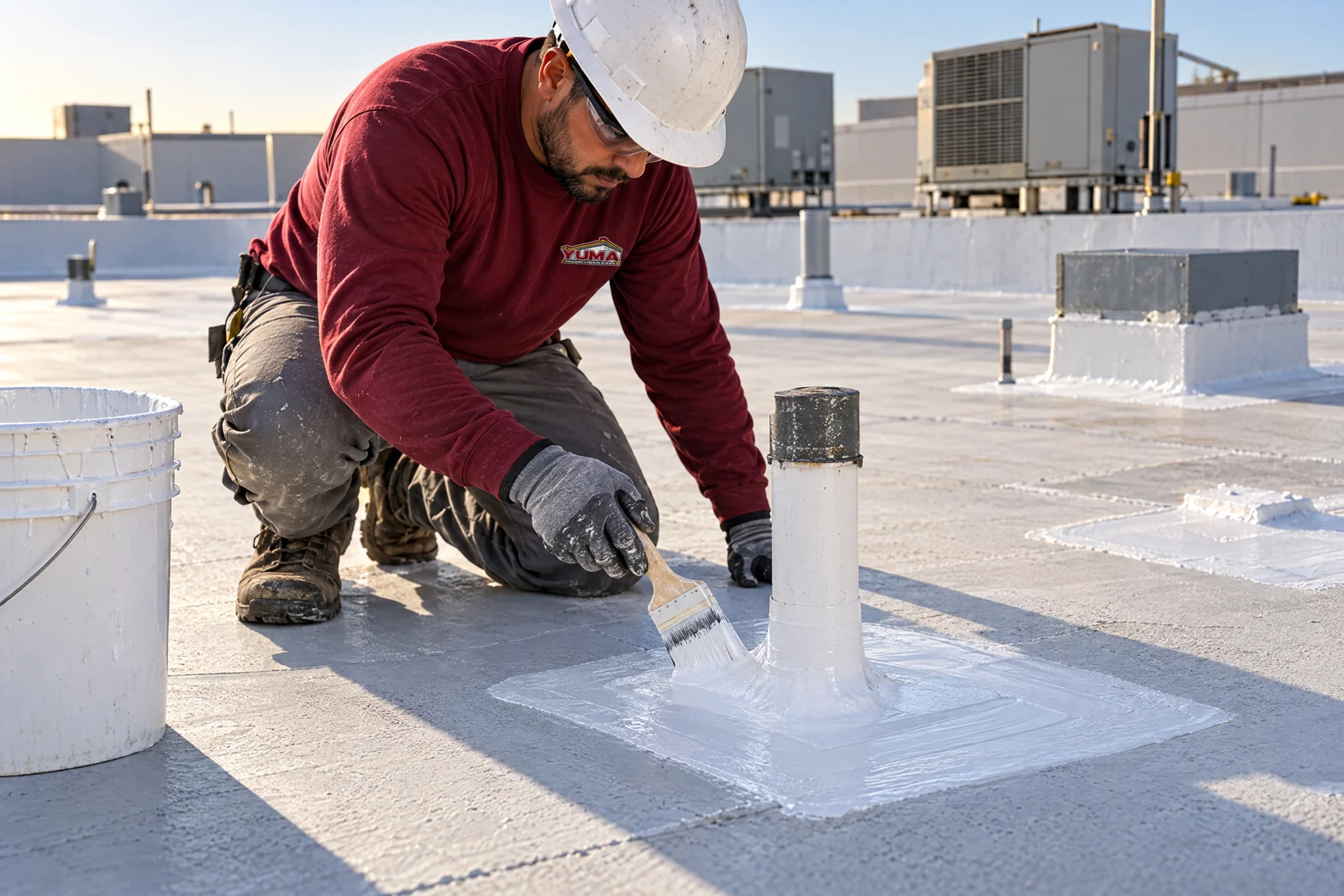
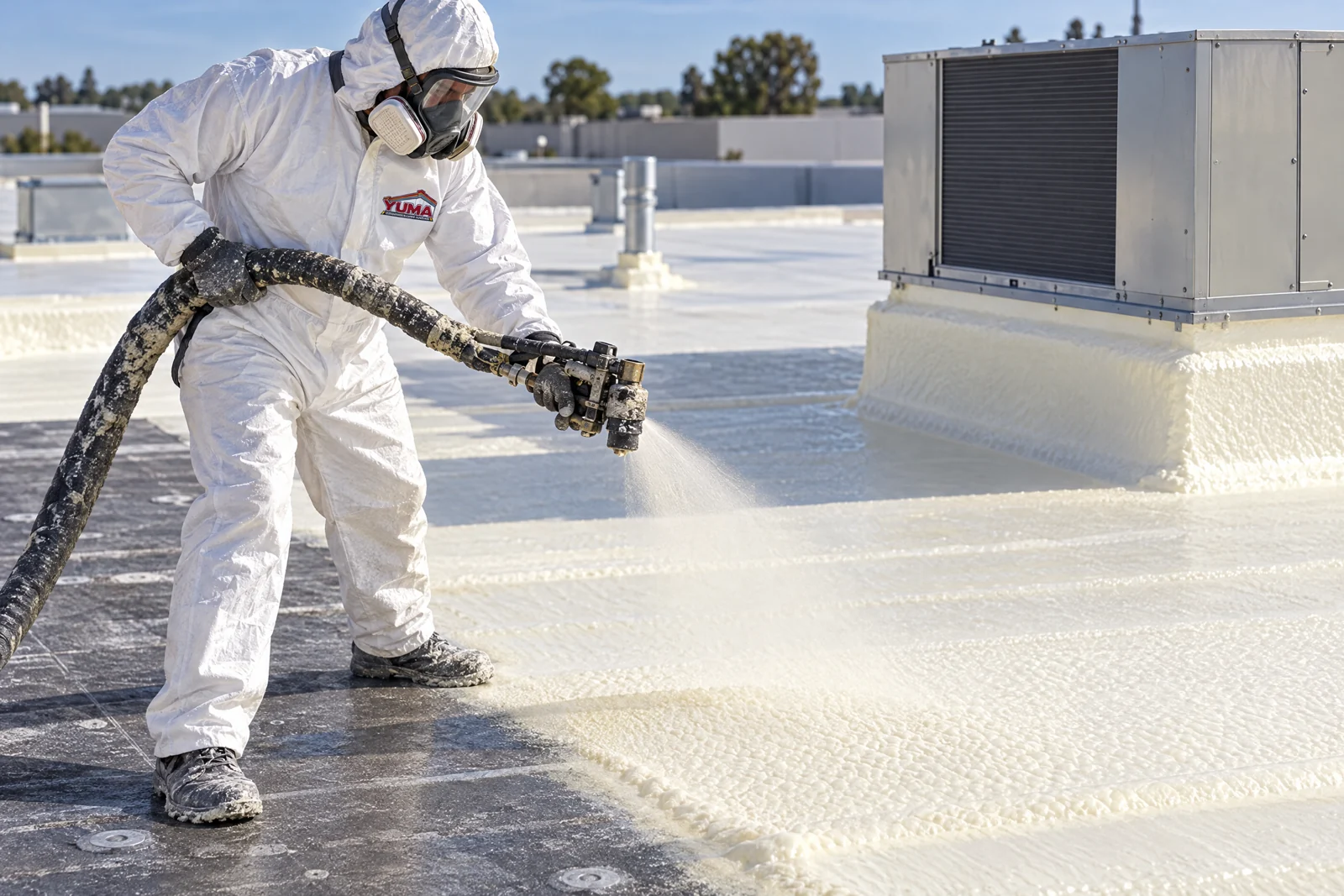
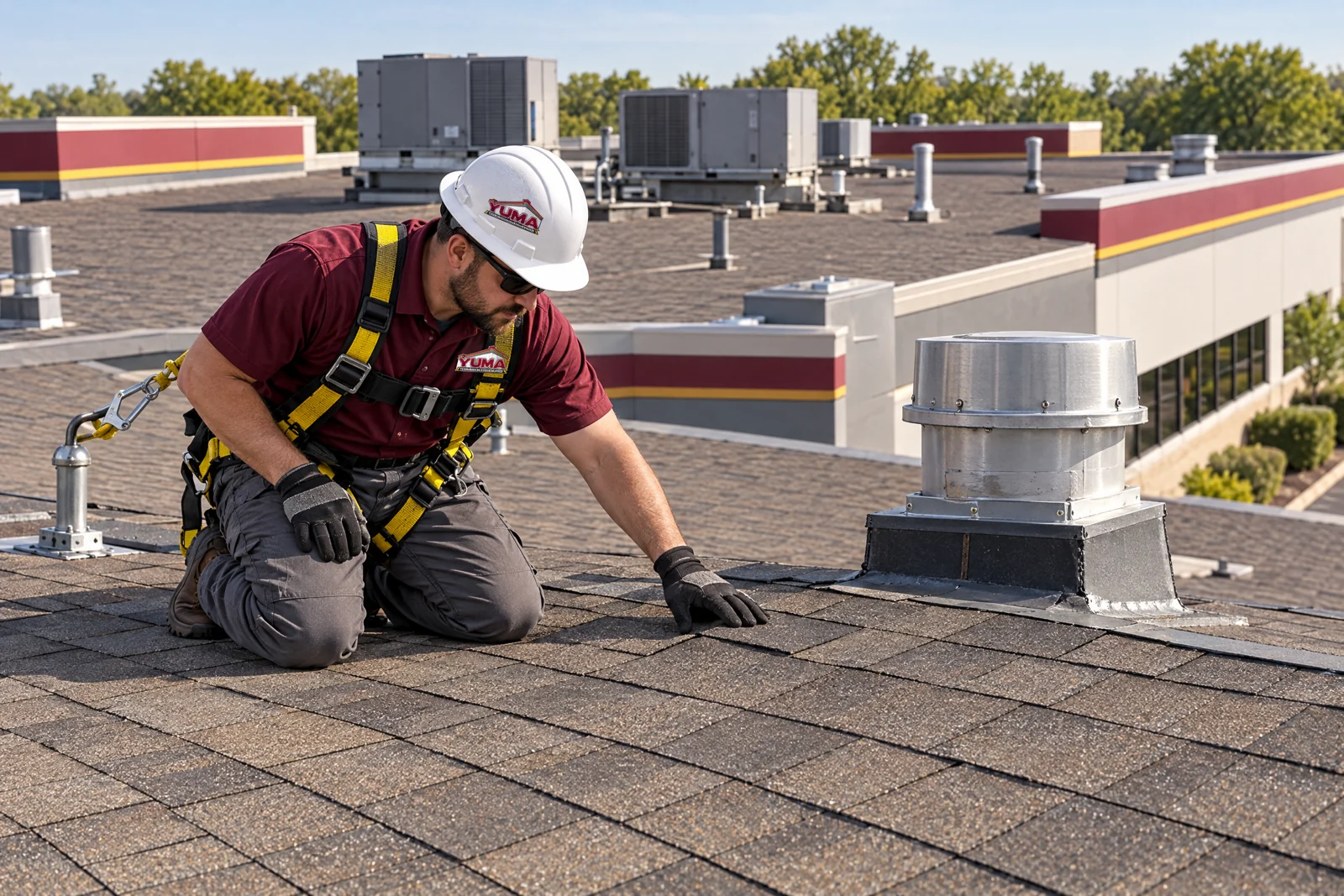
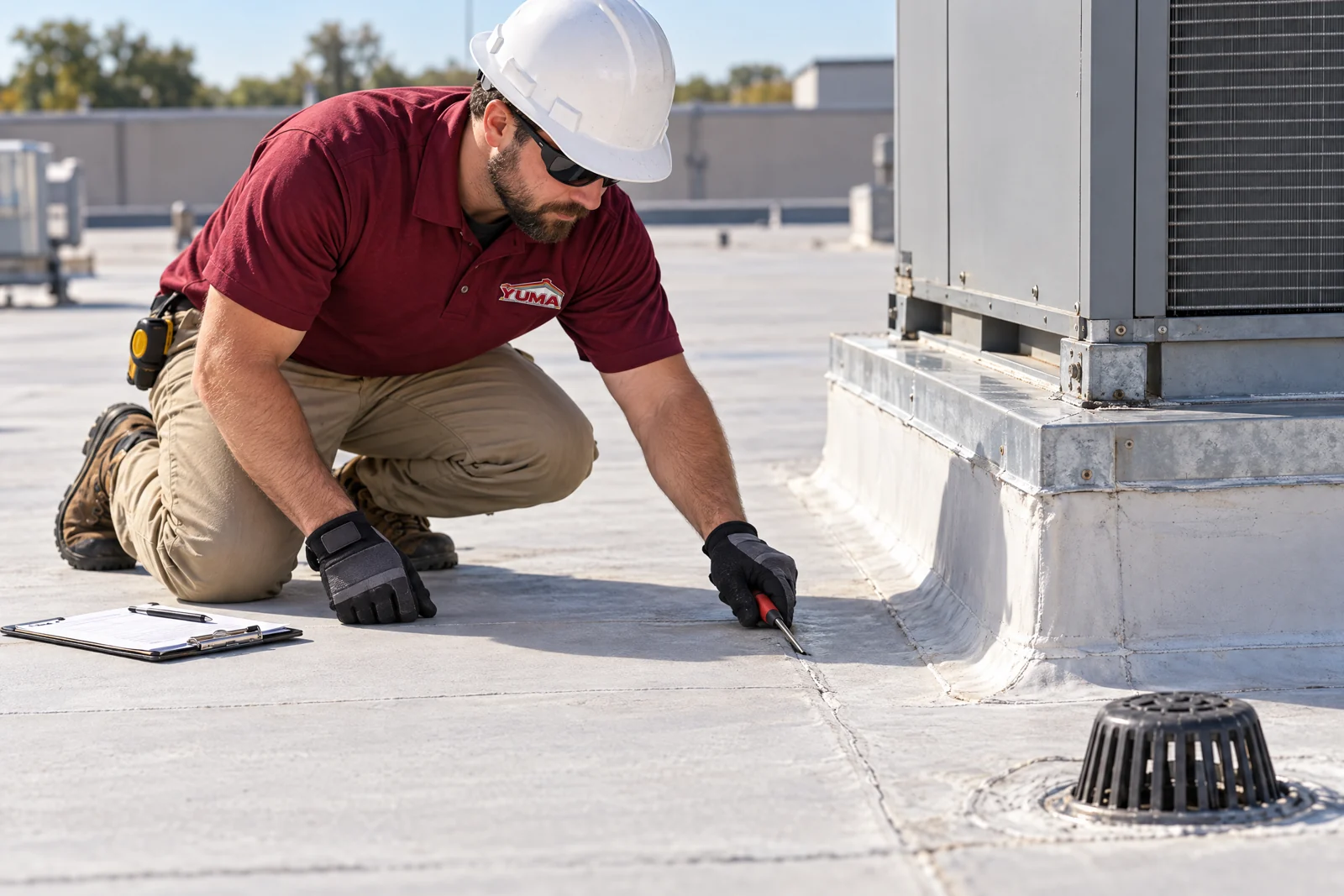
Coating is a condition-based decision. The existing roof must provide a sound base, with drainage, moisture, repairs, and access considered before application.
01
Coating Candidate
Roofing layers are generally sound and attached.
Moisture findings do not require broad removal.
Drainage works or corrections are defined.
Repairs can prepare seams, edges, and penetrations.
Access and rooftop equipment can be managed.
02
Repair First
Leaks still need a source found and corrected.
Loose seams or fasteners cannot be held together by coating.
Ponding areas need drainage work or a clear plan.
Wet insulation may need removal and replacement.
Corrosion and damaged panels need proper treatment.
03
Other Evaluation
Widespread wet insulation limits restoration.
Damaged decking cannot be rebuilt by a coating.
Roofing that is coming apart needs another decision.
Gravel surfaces require special preparation or method.
A failed base may not support a new coating.
Three Yuma Roof Coating Decisions
The commercial roof coating process follows roof condition, preparation needs, and operating constraints rather than a product chosen in advance.
01
Inspect Your Roof
Roof material, moisture, drainage, and attachment determine whether coating can proceed.
Confirm local permit requirements for the proposed repairs and coating.
Yuma generally requires construction permits; its guidance allows some minor-work exceptions.
Separate damaged or wet layers from sound material before application.
02
Which Coating?
The existing roof and its repair needs guide the coating choice.
Check previous coatings, patches, primers, and the existing surface’s compatibility.
Match product preparation and application requirements to the commercial roof.
Account for drainage, rooftop equipment, and suitable drying or curing conditions.
03
What Will It Cost Over Time?
Retaining suitable roofing can reduce removal work; repair needs still affect cost.
Compare the sound area retained with material that must be replaced.
Allow for preparation, detail repairs, access, and required coating thickness.
Assess future recoating after inspection rather than assuming the roof lasts indefinitely.
Foam restoration checks whether existing foam is sound, dry, and protected. Repairs and a renewed topcoat may be more appropriate than adding foam everywhere.
A suitable coating can keep usable roofing in place, but each benefit depends on sound materials, correct preparation, and a system matched to the roof.
Retain Suitable Roofing
Keeping a suitable roof in place may reduce material and labor tied to full replacement. That cost opportunity depends on sound layers, repairs, preparation, access, and the coating system selected for the existing assembly.
Reduce Tear-Off Disruption
A qualified coating can reduce tear-off, debris handling, and interruptions compared with rebuilding the roof. The building still needs a work sequence for tenants, deliveries, equipment, and areas that must stay available.
Discard Less Usable Roofing
When usable roofing stays on the building, less discarded material may leave the property. The amount avoided depends on how much of the existing roof qualifies for restoration after moisture and damage are checked.
Keep A Future Recoat Option
A maintained coating may support a future compatible recoat when the roof remains suitable. Recoating is an option to inspect later, not a promise that replacement will never be needed.
Roof Problems That Need A Closer Look
A visible symptom identifies where to investigate. It does not prove that a coating is the correct repair, especially when hidden layers or drainage are involved.
Leaks After Heavy Rain
A leak that appears only during heavy rain still needs its source found. Coating may be part of the repair plan, but it should follow repairs rather than conceal an unresolved path.
Wet Insulation
Yuma heat cannot be used as proof that wet insulation will dry. Moisture testing may be needed, and saturated insulation generally needs removal and replacement before coating.
Ponding And Low Spots
A standard coating is not a leveling material. We check where water collects and why it stays there, then identify drainage corrections or other roof work before application.
Corrosion And Fasteners
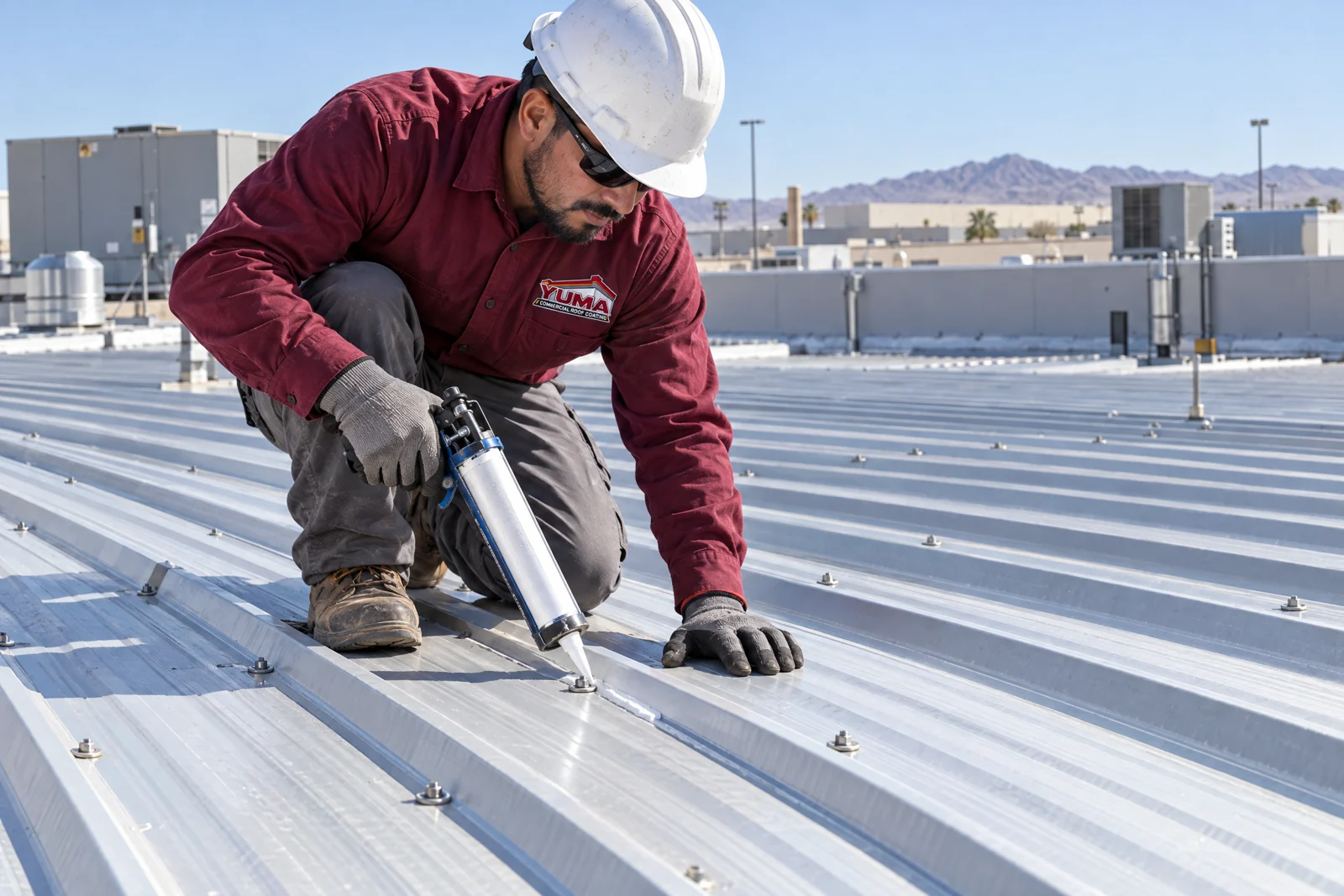
Rust, loose fasteners, missing fasteners, open seams, and damaged sheet metal need treatment before metal coating. Coating protects repaired metal; it does not secure loose panels.
Failed Patches And Penetrations
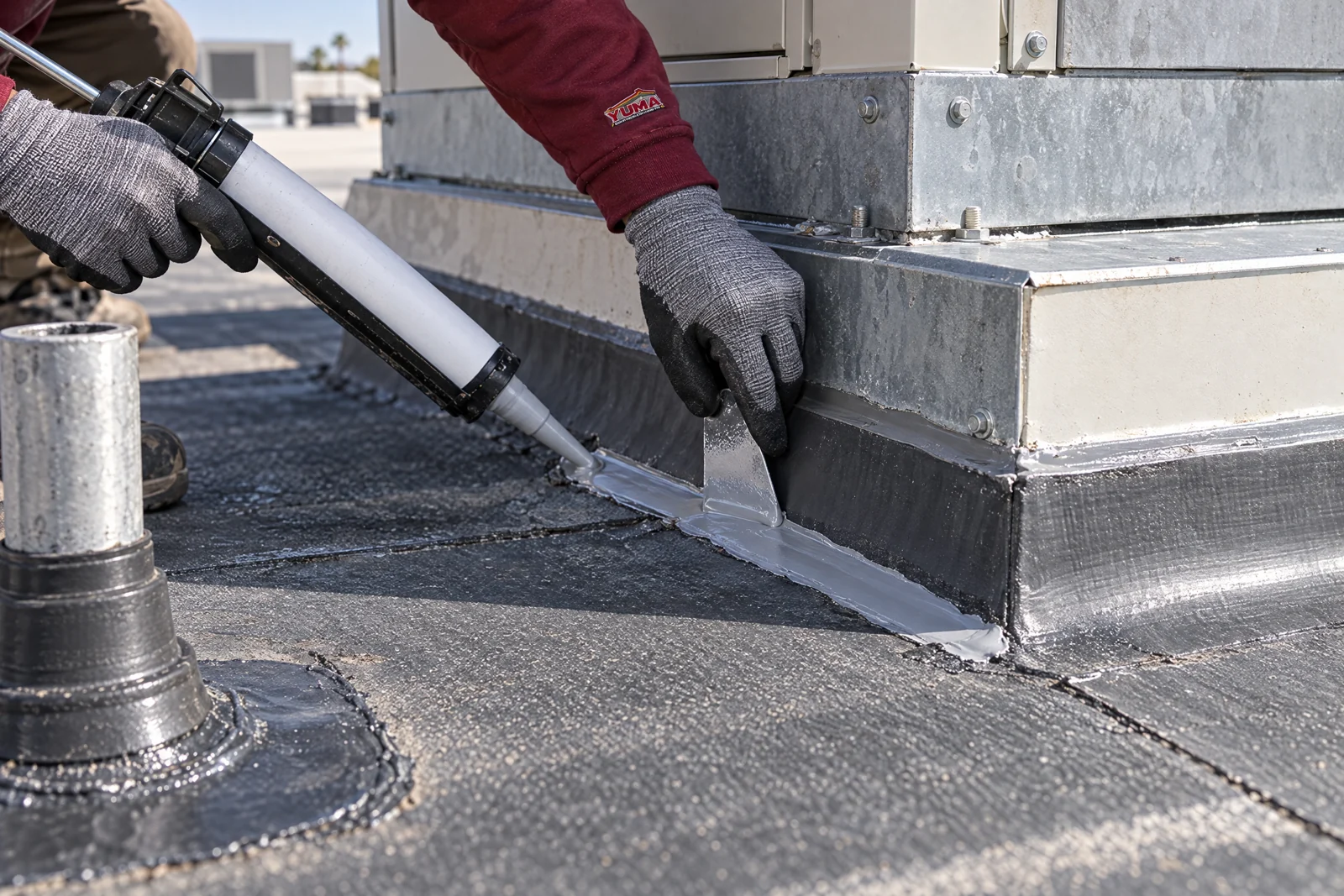
Old patches, pipes, equipment bases, drains, and roof edges may require different sealants, reinforcement, primers, or preparation than the open roof surface.
Commercial Roof Coating Around Yuma
Commercial roof coating service covers Yuma and these approved nearby areas, with each property evaluated for its own roof and operating needs.
Somerton
Coordinate roof access, tenant activity, and work areas around occupied commercial buildings.
What Would Make You Recommend Against Roof Coating?
We may recommend against coating when widespread wet insulation, damaged decking, or roofing that is coming apart leaves too little sound material to keep. A coating cannot rebuild those layers or make a failed base reliable.
The decision follows inspection findings, moisture information, drainage, and the condition of the existing assembly. Where restoration is not sound, repair or replacement needs to be considered instead.
What Is a Reflective Roof Coating Supposed To Do?
A reflective coating reflects more sunlight instead of allowing the roof to absorb as much heat. That can lower roof-surface temperature and reduce heat entering the building.
Reflectivity is only one part of the choice. Insulation, ventilation, roof condition, coating compatibility, and the building’s use still matter, and surface temperature does not guarantee a matching indoor temperature.
What Is the First Step in Your Coating Process?
The first step is Inspect Your Roof. We identify the roofing material, check its condition, look for moisture and repair needs, and determine which areas can support coating.
That inspection guides surface preparation and system choice. We do not select a product first and then try to make the existing roof fit it.
How Do You Know Enough Coating Has Been Applied?
We follow the selected system’s coverage and thickness requirements rather than judging the roof by color alone. A surface can look fully covered before it has enough material for the specified system. Thickness checks help confirm the application on the roof.
Where Can Coating Save Money Compared With Replacement?
The main opportunity is keeping roofing that still has useful life instead of removing and rebuilding it. That may reduce material and labor tied to a full tear-off, depending on the roof condition and scope.
Keeping damaged materials only to lower the price is not sound. The roof must qualify for restoration, and repairs, preparation, access, product, and thickness affect the cost.
Why Can’t the Cost Be Based On Roof Size Alone?
Square footage does not show how much repair or preparation the roof needs. Wet materials, seam repairs, old coatings, access, product choice, and required application thickness can all change the work.
Two roofs with the same area may need different scopes. A useful estimate must account for the existing assembly and the conditions found during inspection.
Get A Free Estimate For Your Roof
Tell us about the commercial building, roof system, access, leaks, and areas that need attention. We will start with the roof condition.